
East Lansing, Michigan
Nearly a century of history sits beneath Harrison Road as it crosses the Red Cedar River through the heart of Michigan State University’s campus in East Lansing, Michigan. Rehabilitating the bridge required more than replacing an aging deck. It meant working with generations of structural improvements, protecting the river below, coordinating significant campus utilities, maintaining access through one of East Lansing’s busiest areas, and being ready to adapt when conditions beneath the surface changed the project entirely.
Clark Dietz provided bridge and roadway design, bridge load rating, Maintenance of Traffic (MOT), utility and right-of-way coordination, traffic engineering, environmental coordination, and construction engineering and inspection for the City of East Lansing’s rehabilitation of the Harrison Road Bridge.
Rehabilitating a Bridge with Nearly a Century of History
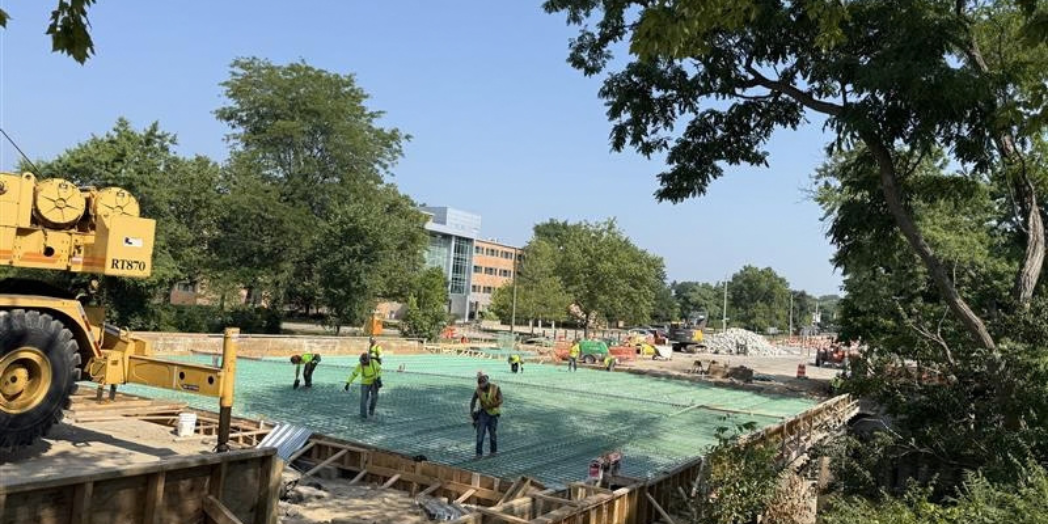
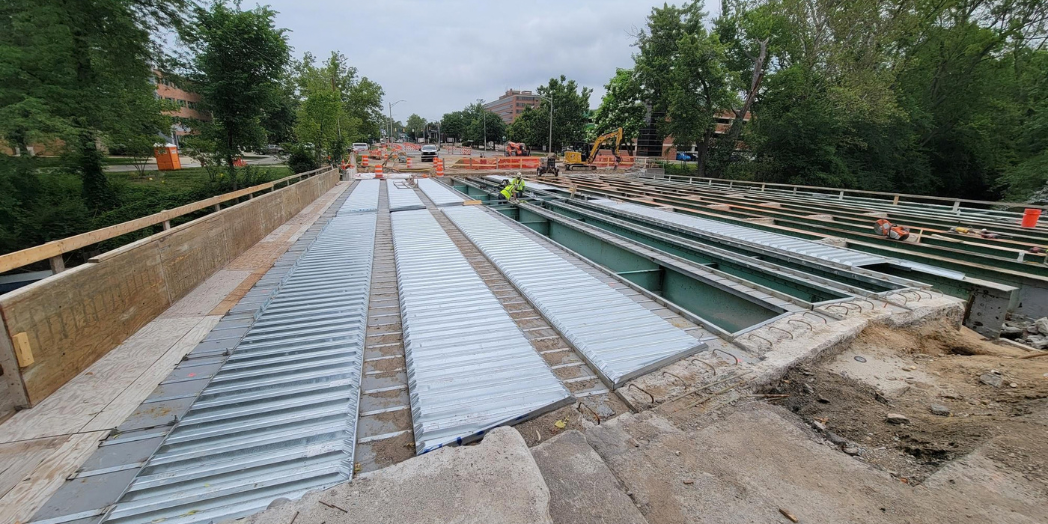
The Harrison Road Bridge had evolved along with the campus around it. Once the existing deck was removed, original riveted steel beams from nearly a century ago were visible alongside beams added during a 1990s widening, creating a structure made up of different generations of materials and design.
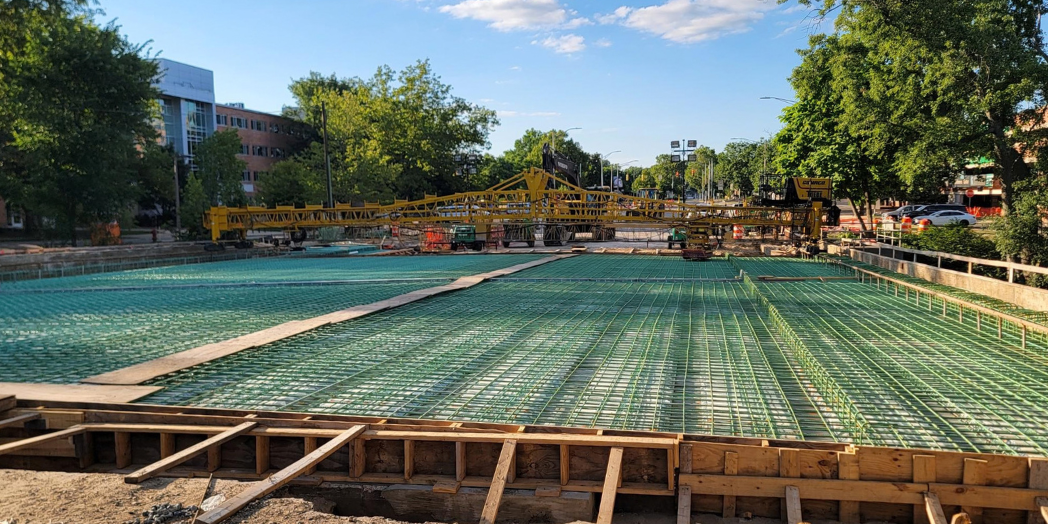
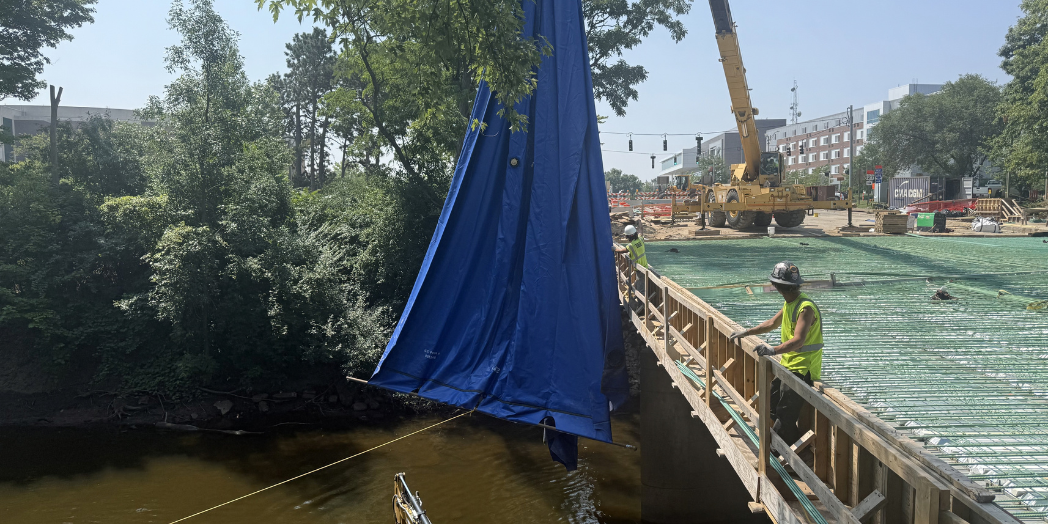
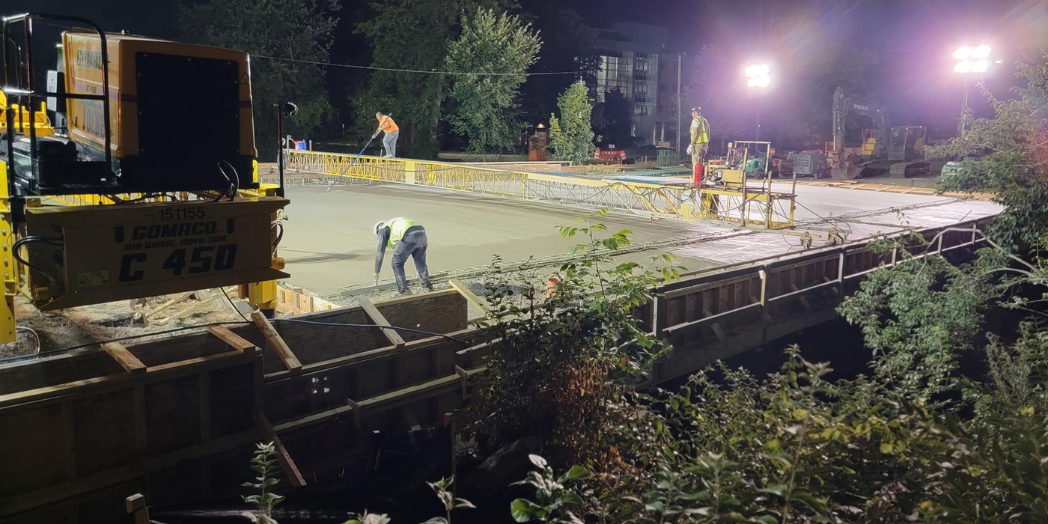
The rehabilitation addressed those existing conditions through full deck and railing replacement, steel beam end repairs and structural steel replacement, beam painting, substructure and abutment repairs, new wingwalls, temporary supports, and scour countermeasures using riprap. Clark Dietz also performed bridge load rating as part of the structural work.
Beyond the bridge itself, the project included reconstruction of the roadway approaches, five lanes of traffic with a center turn lane, sidewalks on both sides of the bridge, utility relocation, signing, pavement markings, and temporary signal modifications. Environmental coordination addressed requirements associated with the Red Cedar River crossing, including bat and freshwater mussel surveys.
The Challenge: What Was Beneath the Bridge
The original construction plan called for part-width construction, maintaining one lane of traffic in each direction while crews rehabilitated the bridge in stages. That approach was designed to reduce disruption on Harrison Road while work progressed.
Once construction began, conditions changed.
During removal of the sidewalk and bridge deck, the team discovered significant conflicts involving Michigan State University’s high-pressure steam infrastructure and other underground utilities. A large campus steam vault adjacent to the bridge had been structurally tied into the bridge deck and was deteriorating. At the same time, previously undocumented utilities conflicted with planned gas line work.
The conflicts could not simply be designed around. Work needed to stop in affected areas while the utilities were addressed, putting the staged construction sequence and project schedule at risk. And the calendar mattered. Construction was taking place during the summer with a target of reopening Harrison Road before thousands of students returned to Michigan State University for the fall semester. Extending the closure into the academic year would bring construction impacts into one of the campus’s busiest periods, including student move-in and the beginning of football season.
The Solution: Change the Plan Quickly
Continuing with part-width construction was no longer the best path forward. The team shifted to a full closure of Harrison Road, giving the contractor the space needed to address the utility conflicts and advance bridge construction more efficiently. That decision required the traffic plan to change almost immediately.
Clark Dietz revised the detour, temporary traffic control, pavement markings, and signal operations to accommodate the full closure. Detour revisions and associated signal changes were developed in less than 24 hours so construction could continue with minimal additional delay. The team coordinated closely with the City of East Lansing, Michigan State University, utility owners, the contractor, and other project partners as conditions evolved.
At the same time, Clark Dietz’s construction engineering and inspection team remained involved in the bridge, roadway, and traffic work, connecting the original design with the decisions being made in the field.
The result was a coordinated response to a challenge that could not have been fully identified until the bridge came apart. Rather than allowing unforeseen conditions to dictate the project, the team adapted the construction and traffic strategy around them while keeping the return of students and campus mobility at the center of the response.
The rehabilitated Harrison Road Bridge extends the life of an important connection across the Red Cedar River while improving the structure, roadway approaches, pedestrian accommodations, and supporting infrastructure serving Michigan State University and the East Lansing, Michigan community.