
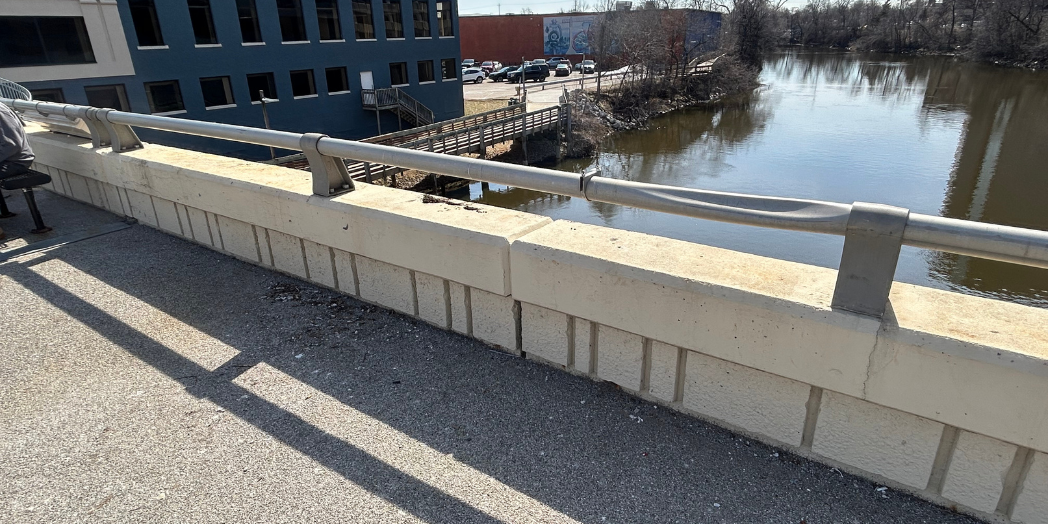
When aging infrastructure stood between the City of Lansing, MI, and the safe, reliable movement of thousands of daily travelers, Clark Dietz engineers were hired to help reshape the future of several critical crossings. Through a multi-year effort involving four bridges and two culverts, the project is bringing new life to structures spanning the Pawlowski Creek, Red Cedar River, Grand River, and Museum Drive, ultimately strengthening mobility across one of Michigan’s most active capital-city corridors.
For Clark Dietz, this project is a testament to the collaborative engineering needed to modernize essential public infrastructure.
Laying the Groundwork: Scoping, Fieldwork, and Early Insights
The project began with an intensive predesign phase, during which Clark Dietz completed on-site field evaluations and developed four detailed scoping reports. These reports documented existing conditions and served as the roadmap for engineering decisions that followed.
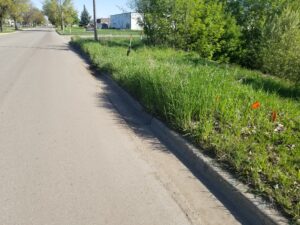
Enterprise Drive
“All the information from the scoping reports was used to develop the rehabilitation plans,” explained Thomas Sereseroz, PE, who served as the primary point of contact for the project and led all quality oversight. “From repair recommendations to structure evaluations, the scoping phase set the direction for what we designed.”
Design work is now complete for the four bridges: Beech Street over the Red Cedar River, Kalamazoo Street over the Grand River, and the two Michigan Avenue structures, one over the Grand River and one over Museum Drive. Each rehabilitation design addresses the unique conditions of its structure, including epoxy overlays, superstructure and substructure repairs, scour mitigation, approach work, and maintenance-of-traffic engineering.
Shifting Scope: When Repairs Become Replacements
As field investigations progressed, the team discovered environmental and condition-based challenges that shifted the direction of one structure. The Enterprise Drive crossing over Pawlowski Creek, originally planned as a repair, will now be fully replaced. The Moores River Drive culvert was evaluated for potential rehabilitation, but structural scoping findings confirmed that a replacement is required.
“Going from a repair to a full replacement changed the project schedule on the Enterprise Drive structure,” Thomas said. “But those decisions ensure the city gets a long-term, structurally reliable solution.”
These changes significantly expanded the project scope, demonstrating the team’s adaptability when real-world conditions differ from expectations.
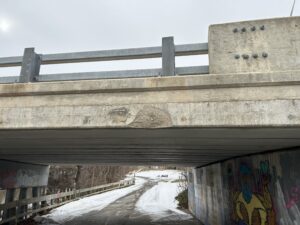
Beech Street over Red Cedar River
Bridges at the Heart of the City: Coordination with Local Stakeholders
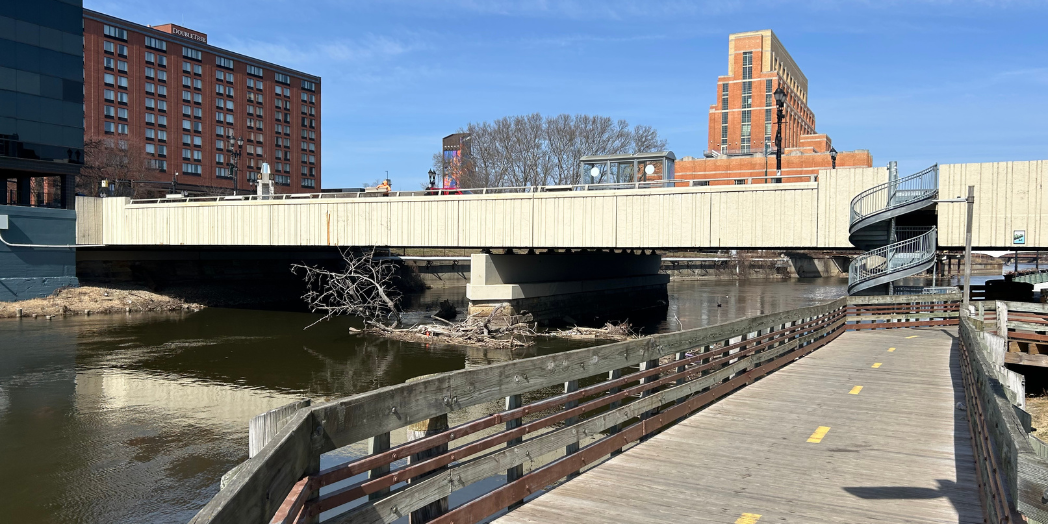
Among the busiest structures in the project are the two Michigan Avenue bridges. Michigan Avenue remains one of Lansing’s most heavily used downtown corridors, formerly part of a state trunkline route and still vital for daily travel.
Rehabilitation of the Michigan Avenue bridge over Museum Drive required thoughtful coordination due to its immediate proximity to the Impression 5 Science Center, the Lansing Center, and several businesses within the riverfront district. Maintaining access for event traffic, school groups, tourists, and convention-center visitors meant staging strategies and detours had to be developed with precision.
Complex Concepts Understood: Maintenance of Traffic (MOT)
Maintenance of Traffic refers to the design and sequencing of temporary traffic control devices, detours, lane closures, and pedestrian routes that keep people moving safely during construction. For bridge and roadway projects, MOT planning must balance construction efficiency with community access, especially in urban environments like downtown Lansing.
Navigating Traffic, Closures, and Construction Needs
Because each bridge serves a different neighborhood and traffic pattern, the maintenance of traffic plans vary widely across the project. Some structures will remain partially open during construction, while others, such as Enterprise Drive and Moores River Drive, will require full closures during replacement.
Clark Dietz will also provide construction oversight for all structures, ensuring design intent is carried forward in the field and supporting the city throughout each phase of work.
Construction is scheduled to begin in summer 2026, marking the transition from design to on-the-ground improvements across the city.
The team’s responsibilities extend beyond structural design to include roadway approach design, ensuring each crossing ties smoothly into its connecting roadway system. Strong collaboration with our trusted subconsultants also contributed to the project’s success: Wolverine Engineers provided survey services, and TYME Engineering delivered geotechnical evaluations that informed critical design decisions.
A Strong Partnership and a Stronger Network for Lansing
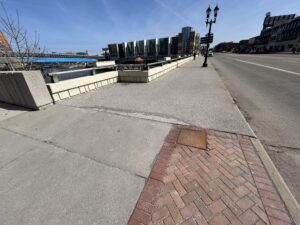
Michigan Avenue over Grand River
For Clark Dietz, this project represents not only a major technical effort but also the beginning of a meaningful relationship with the City of Lansing.
“It’s our first project with the city, and it’s going really well,” Thomas said. “There’s been great collaboration throughout the design process.”
When complete, the rehabilitated and replaced structures will renew key connections across the city, improving safety, enhancing mobility, and supporting residents, visitors, and local businesses. From the campus-adjacent crossings downtown to the neighborhood links along Pawlowski Creek and Moores River Drive, the work ensures that Lansing’s transportation network remains strong for decades to come.
Through thoughtful design, adaptive engineering, and close coordination with local partners, the project reflects the best of what modern infrastructure planning can deliver: safer crossings, longer-lasting structures, and a resilient framework that keeps communities connected.
Learn more:

Questions? Contact Thomas Sereseroz, PE