

Lost Bridge Force Main, Decatur, Illinois
CLIENT: Sanitary District of Decatur
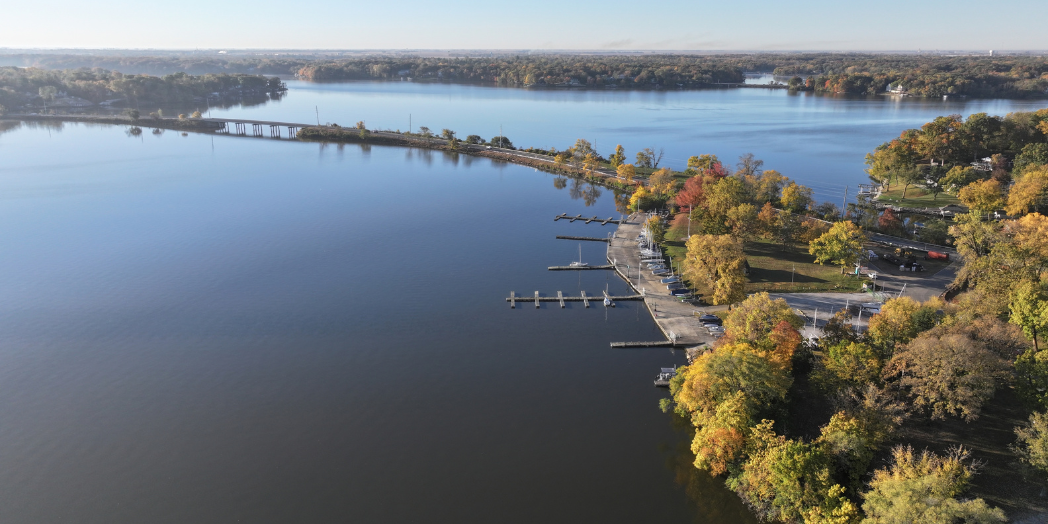
For more than 30 years, wastewater conveyed by the Lost Bridge Lift Station depended on a single active pipeline crossing Lake Decatur. After the original force main failed and was removed from service, a 14-inch ductile iron line constructed in the 1980s became the station’s only connection to treatment facilities on the west side of the lake. Without a backup, a break or shutdown could interrupt wastewater service and risk overflow into the community’s primary drinking-water source.
Clark Dietz served as lead engineer, providing design and construction engineering services for a second 14-inch force main beneath Lake Decatur. The project restored redundancy to a critical crossing within the Sanitary District of Decatur’s wastewater system, which serves more than 80,000 residents.
Finding a Better Route Beneath the Lake
Clark Dietz evaluated routing and construction alternatives, including placing the new pipeline along the causeway. That approach would have required lane closures, pavement removal, utility reconstruction, and eventual relocation when the bridge is replaced.
The team instead recommended horizontal directional drilling, a trenchless method that installed the pipeline beneath the lake while avoiding roadway closures and shoreline excavation. This alignment preserved public access and kept the new main independent of future bridge reconstruction.
Engineering a Complex Installation
The long crossing required careful evaluation of pipe strength, pull forces, bending limits, and alignment geometry. Clark Dietz worked with drilling contractors, pipe manufacturers, and material specialists to select 14-inch fusible PVC capable of withstanding installation demands while providing corrosion resistance and long-term performance.
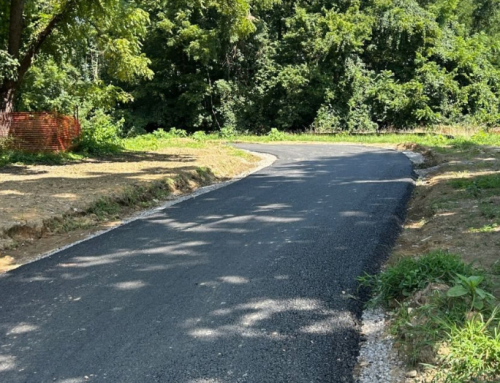
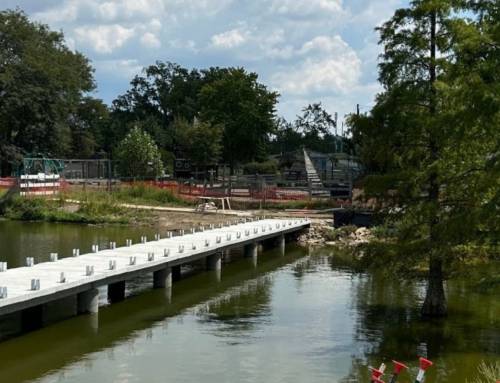
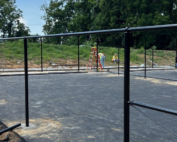
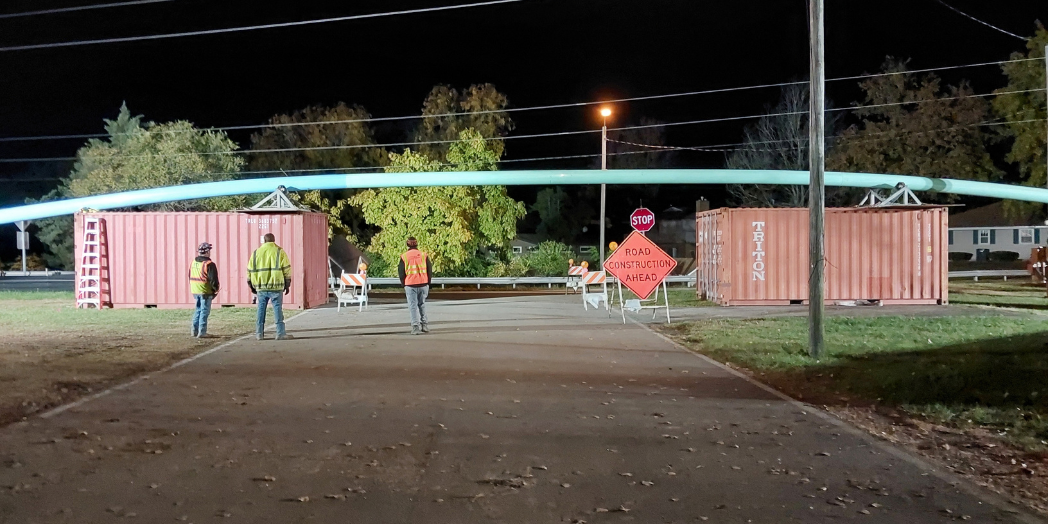
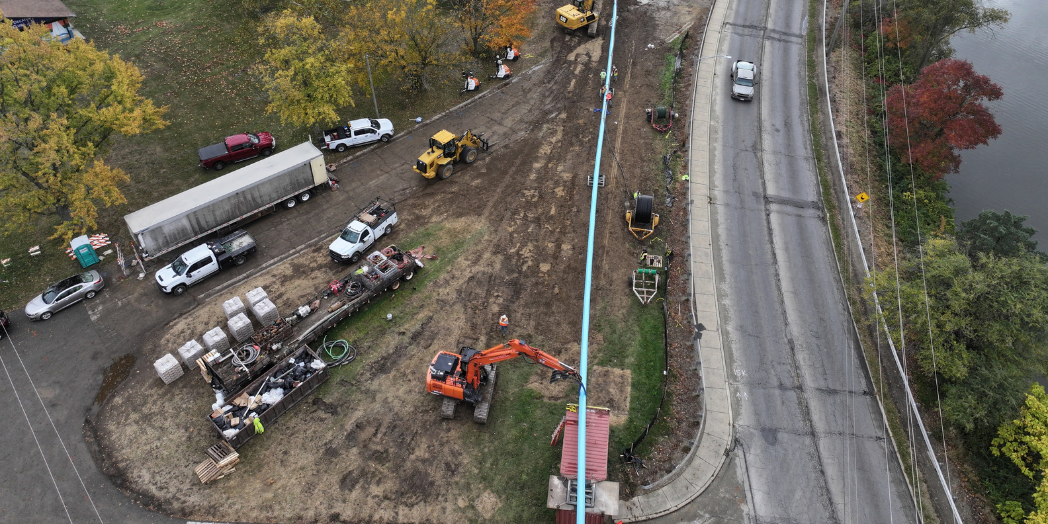
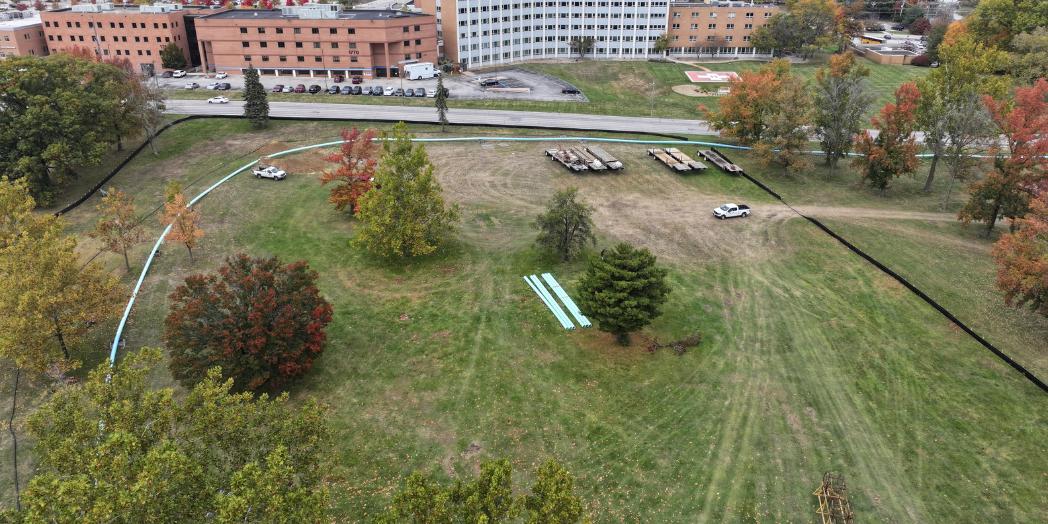
Limited space along both shores added construction challenges. Pipe fusion and staging took place along the perimeter of a public park, preserving recreational access. Temporary sound walls reduced construction noise near homes, and elevated pipe supports maintained access to the Decatur Yacht Club.
Crews completed the approximately 20-hour pullback beneath the lake while the lift station remained operational. Connections on both shores were completed in constrained work zones near homes, utilities, and roadways without interrupting wastewater service. Clark Dietz also performed surge analysis to model sudden pressure changes and develop startup procedures that protected the pipeline and equipment.
Delivering Lasting Community Value
The new force main provides a backup conveyance route during maintenance or repairs, improves wet-weather capacity, and reduces the risk of wastewater overflow into Lake Decatur. The trenchless approach also preserved shoreline areas, maintained traffic and lake access, and avoided future pipeline relocation.
During construction, Clark Dietz coordinated with the contractor to accommodate two additional conduits for future fiber internet service. Incorporating them into the same crossing supported expanded connectivity for residents and a nearby elementary school while avoiding a separate installation, with estimated savings of $500,000.
Completed in April 2025, the project strengthens wastewater reliability while protecting the water resources, public spaces, and daily activities that make Lake Decatur essential to the community.
Explore how the project is strengthening Decatur’s wastewater system and take a closer look at the pipeline installation beneath Lake Decatur.
The project’s engineering approach and community benefits also earned recognition from ACEC Illinois. Read more about its Special Achievement Award.