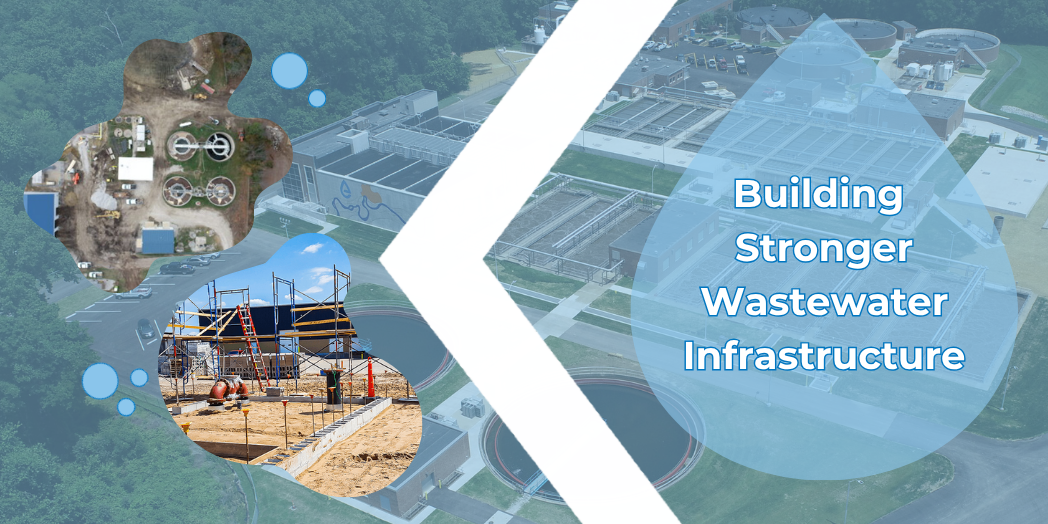
Wastewater systems are some of the most important and complex pieces of infrastructure that communities rely on every day. They protect public health, keep rivers and lakes cleaner, support local businesses and industries, allow neighborhoods to grow, and help communities prepare for the future.
Much of this infrastructure operates behind the scenes every day. As communities grow and regulations evolve, wastewater systems must continue operating reliably while adapting to changing treatment demands, aging infrastructure, and long-term capacity needs.
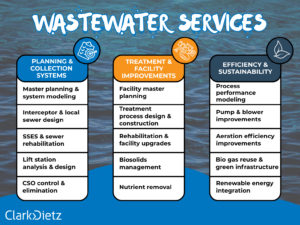
At Clark Dietz, our wastewater team partners with communities to help solve those challenges through practical, forward-thinking infrastructure solutions. From expanding treatment plants and rehabilitating sewer systems to improving nutrient removal, upgrading lift stations, and increasing energy efficiency, we help communities strengthen the critical infrastructure they rely on every day.
Our experience spans the full wastewater process, including master planning, system modeling, treatment process improvements, biosolids management, green infrastructure, and renewable energy integration. Across Illinois, Indiana, Wisconsin, Kentucky, and Michigan, we continue helping communities invest in infrastructure built to serve future generations.
Wastewater Treatment Plant Expansion in St. Joseph, Illinois
In St. Joseph, community growth and evolving treatment needs led to a major wastewater treatment plant expansion designed to improve long-term capacity, performance, and operational efficiency.
The completed project increased the plant’s capacity from 0.56 million gallons per day (MGD) to 0.95 MGD, creating room for approximately 1,200 future homes while helping meet updated nutrient removal requirements.
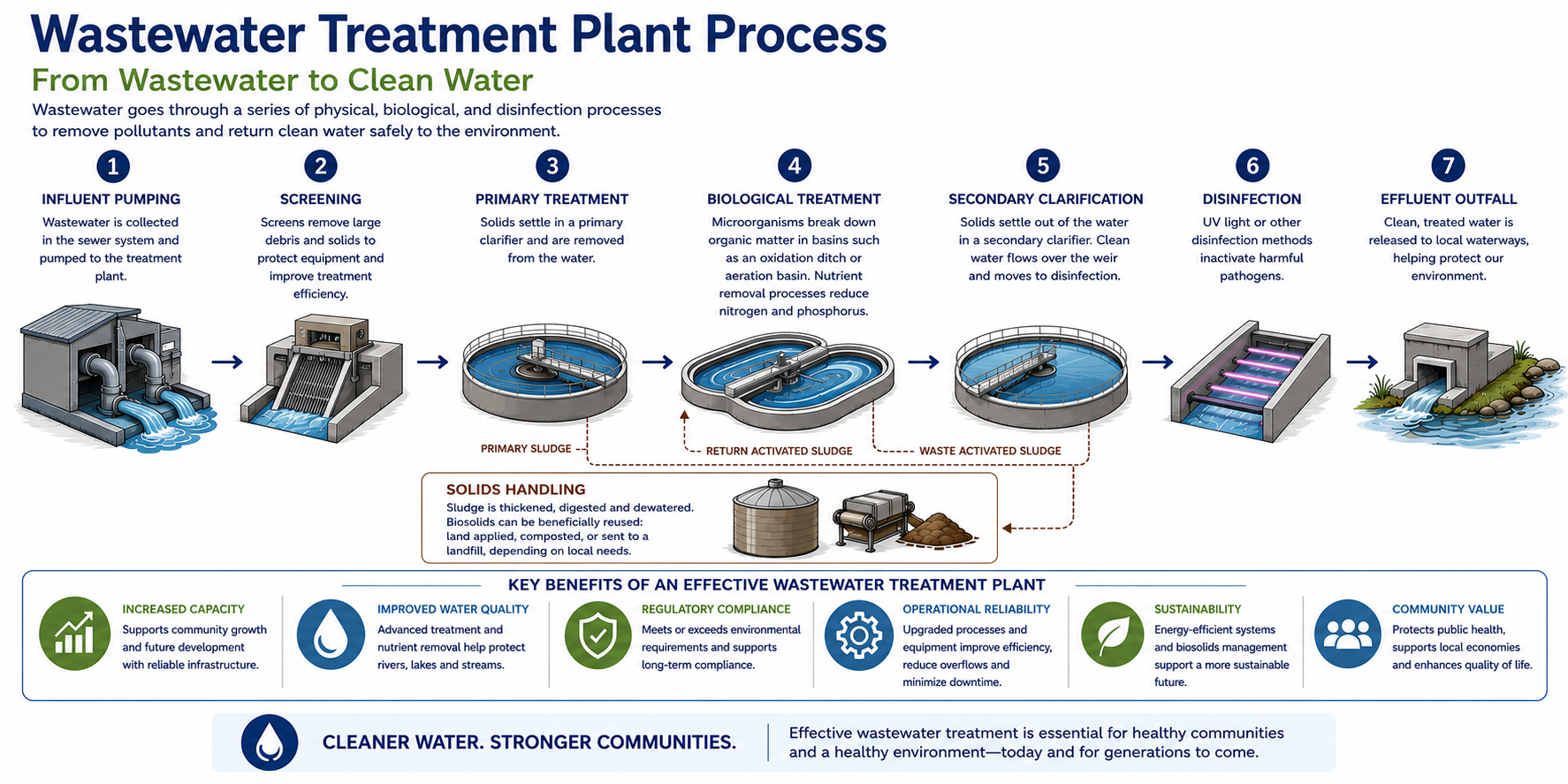
Complex Concepts Understood: How Does a Wastewater Treatment Plant Work?
A wastewater treatment plant (WWTP) cleans dirty water through several important treatment steps before it is safely returned to the environment.
Improvements included upgrades to the influent pumping system, enhanced treatment processes, UV disinfection improvements, and the conversion of existing structures into secondary clarifiers and aerobic digesters. By strategically reusing portions of the existing infrastructure, the project minimized costs and construction impacts while maximizing long-term value for the community.
Additional upgrades included a new bar screen structure designed to improve accessibility and increase treatment capacity, along with an oxidation ditch system designed for biological nitrogen and phosphorus removal.
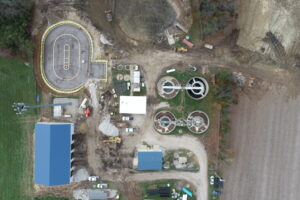
Wastewater treatment plant in St. Joseph, IL.
Existing phosphorus removal systems were reused where possible, while a new carbon feed system was added to further support nitrogen removal performance. The project also included upgrades to the plant’s effluent outfall and the addition of a passive reaeration structure to help meet dissolved oxygen requirements.
Beyond operational improvements, the project created a more modern and efficient facility for village staff through the addition of new office, laboratory and storage spaces. Today, the upgraded facility provides greater flexibility, reliability, and capacity to support the community well into the future while helping protect local waterways and environmental resources.
Read more on our portfolio or our blog.
East Wastewater Treatment Plant Capacity Expansion in Evansville, Indiana
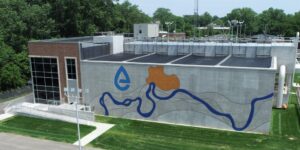
Read more here.
Stewart Avenue Lift Station and Sewer System Planning in Wausau, Wisconsin
In Wausau, recurring wet-weather events were putting added strain on the city’s 72nd Avenue and Industrial Park lift stations, which serve a large portion of the west side of the community, including the Wausau Business Campus and several industrial users.
To help improve long-term reliability and prepare for future growth, the City partnered with Clark Dietz on a proactive wastewater infrastructure improvement plan.
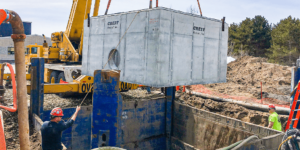
Stewart Avenue Lift Station and Sewer System Planning in Wausau, WI.
Clark Dietz completed a service area planning study, lift station capacity analysis and force main feasibility analysis before designing a new lift station, force main and interceptor sewer system sized to accommodate projected 20-year flows. Improvements also included new energy-efficient pumps and a modernized lift station designed to complement the surrounding area.
Today, the upgraded system provides the City of Wausau with greater confidence during heavy rain events while improving reliability, operational efficiency and long-term performance. The project received the 2020 Engineering Excellence State Finalist Award.
Read more here.
Additional Projects
Projects like St. Joseph, Evansville, and Wausau reflect just a portion of the wastewater solutions Clark Dietz delivers throughout the region. Our team continues partnering with municipalities, sanitary districts, and utilities on projects that improve reliability, increase system capacity, and help communities prepare for future growth and environmental challenges.
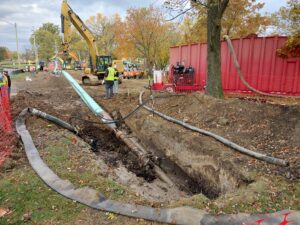
Clark Dietz also partnered with the Sanitary District of Decatur, Illinois, on a major wastewater infrastructure improvement project focused on increasing system resilience and reliability. The Lost Bridge Force Main project includes the design and installation of a new 14-inch force main beneath Lake Decatur to replace aging infrastructure, improve redundancy, and reduce the risk of sewer overflows during high-flow conditions. The project recently received the 2026 Special Achievement Award from ACEC Illinois for its innovation and long-term community impact.
Read more about the Lost Bridge Force Main project here.
Every wastewater project is ultimately an investment in a community’s future. Whether supporting growing neighborhoods, protecting waterways, improving system reliability, or preparing infrastructure for future demand, these projects help create stronger and more resilient communities.
At Clark Dietz, we remain committed to delivering practical, forward-thinking wastewater solutions that balance operational performance, environmental stewardship, and long-term value. By creating cherished partnerships, we help communities strengthen the essential infrastructure residents and businesses rely on every day.
Learn more about our wastewater services here.
Explore more infrastructure stories and project insights on our blog.