
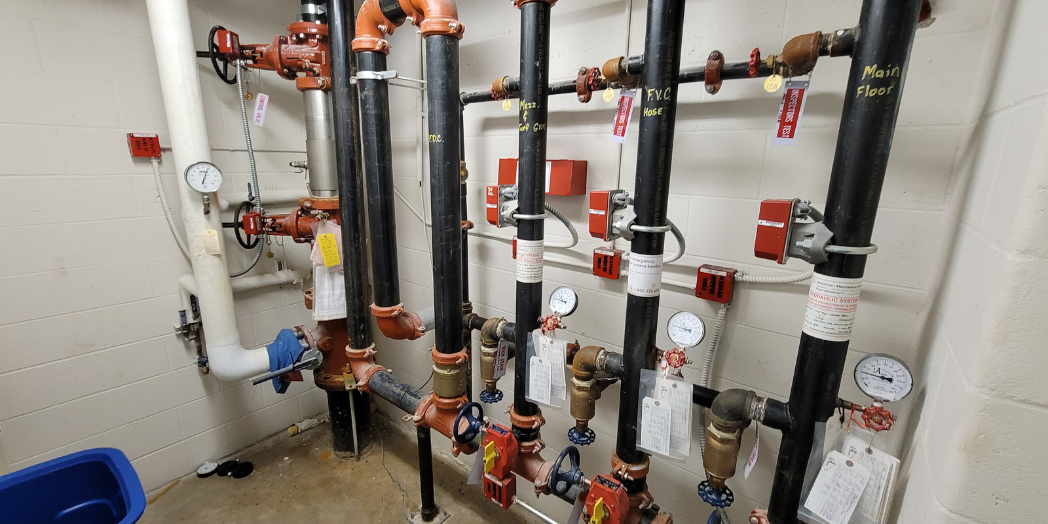
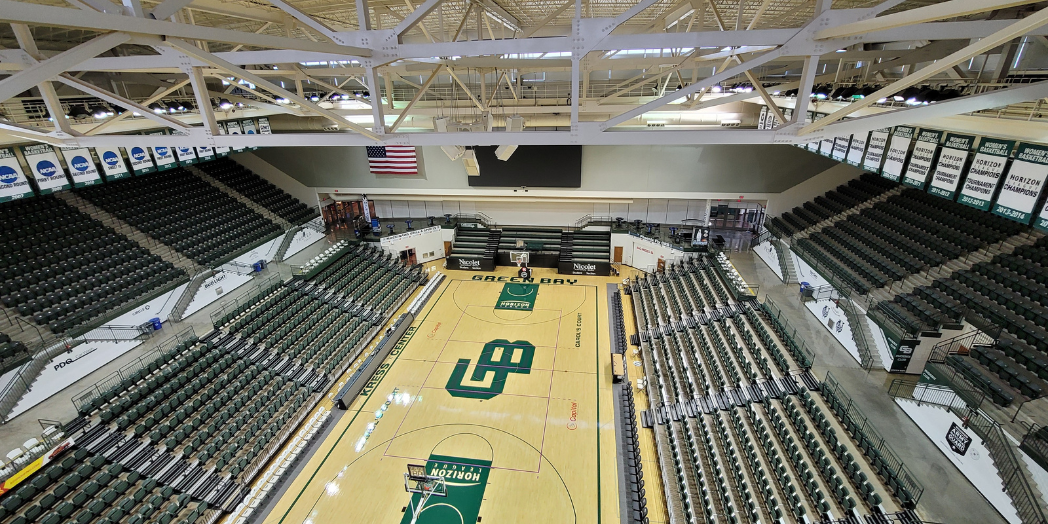
The University of Wisconsin–Green Bay is taking a significant step toward modernizing its life safety infrastructure. Clark Dietz designed a comprehensive fire alarm system replacement across nine academic buildings, with construction now underway. The project entered construction in 2025 and is anticipated to be completed by late 2026.
Designing a Modern, Campuswide System
UW–Green Bay currently operates a Simplex fire alarm system. As part of this upgrade, the team designed a new campus-wide head-end that will eventually support all university buildings. The nine buildings included in the current phase will receive complete fire alarm replacements, and the rest of the campus will tie into the new head-end once construction is complete.
Complex Concepts Understood: Fire Alarm Head-End
The head-end of a fire alarm system is essentially its command center, or the place where the system’s intelligence lives. In modern designs, this head-end is the fire alarm control unit (FACU), which houses the system’s central processing unit (CPU). This unit constantly monitors all connected detection devices, interprets their signals, and decides how the system should respond. In other words, the head-end is the coordinating hub that keeps the entire fire alarm system functioning as a whole.
According to the National Fire Protection Association, U.S. fire departments responded to an estimated annual average of 3,231 structure fires on college campuses, specifically in dormitories, fraternity and sorority houses, and military barracks between 2019 and 2023. These fires caused an average of 19 civilian injuries each year and resulted in $19 million in direct property damage. Nearly three out of four of these incidents began in kitchens or cooking areas, with unattended cooking standing out as the most common contributing factor.
At the same time, fire hazards on college campuses are evolving. Lithium-ion batteries, used in devices ranging from laptops and phones to e-bikes and scooters, are increasingly linked to overheating, fires, and explosions when improperly used or stored. As these risks grow, the role of a responsive head-end capable of quickly detecting, interpreting, and relaying emergency signals becomes even more crucial in protecting students and property.

“This fire alarm upgrade at UW–Green Bay provides a critical life safety improvement for the campus,” said Lisa Zahrt, PE, LEED AP, the Project Manager. “The new system features upgraded reporting and code-compliant detection and notification systems to increase the overall confidence in campus safety for students and staff.”
Coordinating With a Campus in Transition
A major challenge during design involved the university’s shifting fiber network. The existing library, once the central networking hub, is being demolished and rebuilt. Because fire alarm communication depends heavily on reliable network infrastructure, the team needed to understand how the library project would affect fiber paths and system connectivity.
“We had to coordinate with that to ensure we had a network that would be workable for this fire alarm system when it was installed,” Lisa said.
Room-by-Room, Building-by-Building Assessments
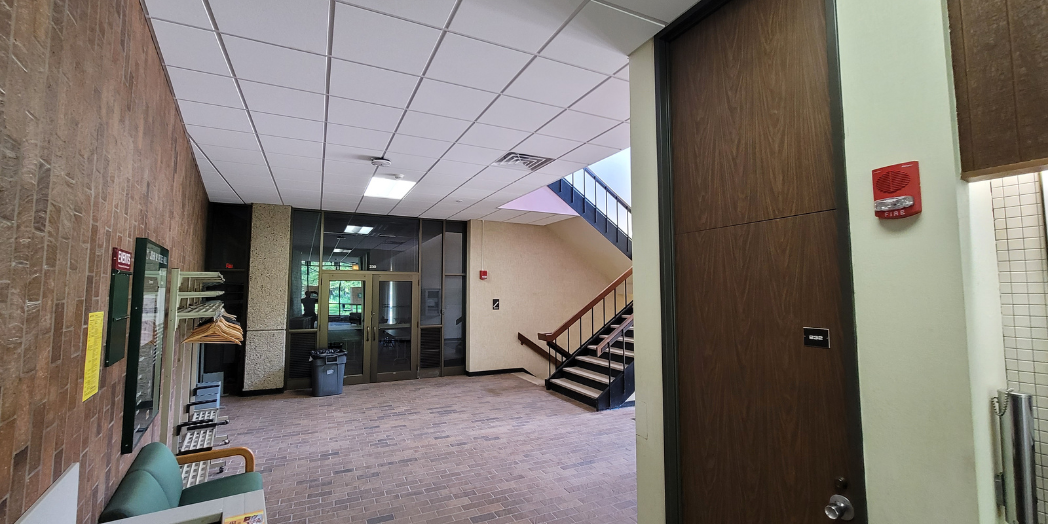
The project required extensive fieldwork across a wide variety of academic and special-use spaces. “We had to survey every building and every room in every building,” Lisa said. “There’s a lot that goes into how we lay out the system based on the architecture of the space.”
As Lisa later reflected, the design team encountered an unusually diverse range of environments. The campus includes theaters, lecture halls, classrooms, offices, arenas, laboratories, event spaces, museum environments, art and music spaces, a greenhouse, and mechanical rooms. Each of these spaces comes with its own unique fire alarm requirements.

Moving Into Construction
Because the buildings will remain occupied throughout construction, maintaining uninterrupted life safety coverage is essential. Lisa explained that the new system must be installed while the old one remains active. “The contractor has to install the new fire alarm system in parallel with the old one,” Lisa said. “The buildings can’t be without a fire alarm system for any period of time.”
The construction phase has started smoothly. Lisa attributed this to strong collaboration and continuity with the contractor, who previously worked with the team on another UW–Green Bay project. “We’re all familiar with each other, and it worked out really well,” Lisa said. “They’ve been a good contractor, and that makes a huge difference.”
Looking Ahead
Once complete, the upgraded system will provide UW–Green Bay with a modern, reliable fire alarm network designed to support long-term campus safety. The improvements will allow the university to better protect students, faculty, staff, and visitors while creating a foundation for future expansion and modernization.

Questions? Contact Project Manager, Lisa Zahrt, PE, LEED AP.