

One of Michigan’s busiest stretches of freeway in Detroit is set for a major transformation, reshaping the daily commute for thousands of drivers. The I-94 Burns to Barrett project, spanning two miles, is expected to begin in 2028 and be completed in 2031.
This Michigan Department of Transportation (MDOT) project, managed through the Detroit TSC, is a full reconstruction that includes expanding the freeway to eight lanes, building a massive tunnel sewer, reconstructing eight bridges, upgrading surface drainage and retaining walls, and reconfiguring two major interchanges, including a new Diverging Diamond Interchange (DDI) at Conner Street.
As a subconsultant to WSP, Clark Dietz’s primary focus is Maintenance of Traffic (MOT) design, ensuring that vehicles and emergency responders can move safely during years of heavy construction.
Complex Concepts Understood: Maintenance of Traffic (MOT)

Maintenance of Traffic (MOT) refers to the planning and design strategies that keep people moving through and around work zones during construction. On a project as intricate as I-94 Burns to Barrett, MOT design is central to success. It balances mobility with contractor access, safety requirements, and the sequencing of multiple construction operations in a tight urban corridor.
“Our scope is the work zone traffic design, so maintaining traffic while constructing will be happening,” explained Brandon Hasso, PE, Lead Traffic Engineer. “The project is a full reconstruct along I-94 from Burns Street to Barrett Street, and at the same time also reconstructing the Conner Avenue and I-94 interchange from the current configuration to a DDI.”
In addition to MOT design, Clark Dietz is supporting the project in several other areas. The team has contributed to drainage and hydrology design and non-freeway lighting design elements. Collectively, these services reflect a broad role in shaping both the freeway and its surrounding infrastructure.
A Project Full of Moving Parts
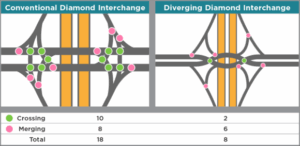
A Diverging Diamond Interchange briefly shifts traffic to the opposite side of the road at the interchange, allowing vehicles to enter and exit the freeway more efficiently without left-turn conflicts. While DDIs improve traffic flow and safety once built, constructing one while keeping the freeway open will be no small task.
The project goes beyond pavement and bridges. While maintaining traffic, a new tunnel sewer will be built roughly 30 feet below the depressed freeway, stretching from east of Conner Avenue to Gratiot Avenue, with a new pump station at Conner. Eight bridges will be reconstructed, including the Conrail Railroad (X01) structure.
Engineering in a Tight Space
Planning how to stage all these elements in a congested urban corridor has been one of the project’s greatest challenges.
“I would start with just the restrictions we need to follow,” Hasso said. “Having to maintain four-lanes, with two lanes in each direction, on a depressed corridor where you can’t really widen is difficult, all while making sure there’s always room for emergency situations.”
Temporary drainage for the tunnel sewer construction will also require careful planning, since there’s no option to shift traffic onto an additional lane to make construction easier.
Sequencing the Work
Coordinating construction schedules adds another layer of complexity. The I-94 Burns to Barrett project involves multiple operations happening in the same corridor, and each step has to be timed carefully. For Clark Dietz, that means balancing not only what gets built, but also when and how it happens to keep traffic moving.
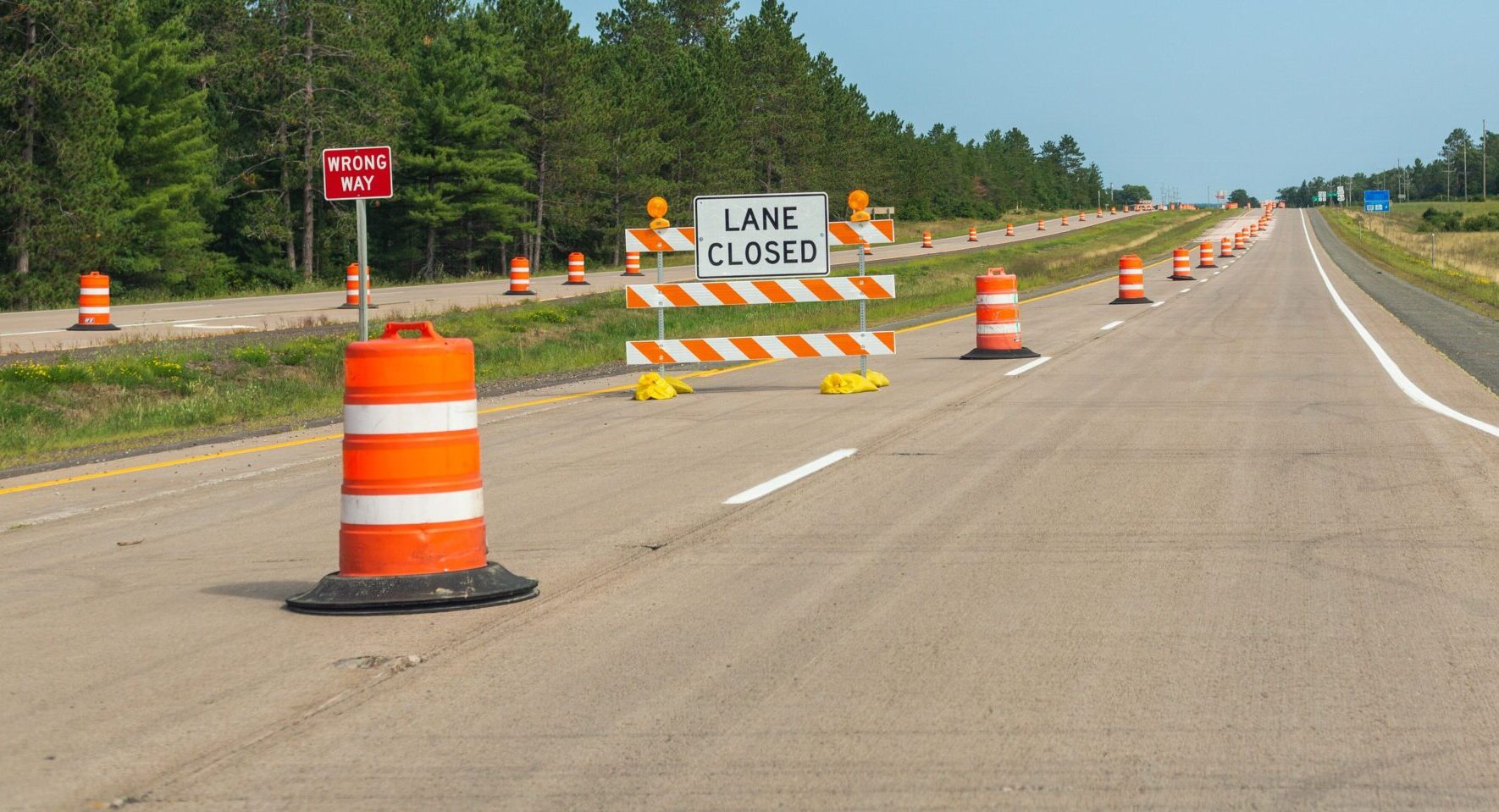
“One of the big complexities of the job is developing staging plans that fit all the restrictions,” Hasso said. “We also have to make sure everything works with the project schedule, because there will be potentially seven different operations happening at the same time. How do they all interact? How does building the Diverging Diamond Interchange, constructing the westbound work, and constructing a bridge above it all impact traffic when it happens concurrently? That’s a big part of why it will be so challenging.”
The project has recently been split into two jobs, with a design-build package for the tunnel sewer moving ahead before other reconstruction continues. This change altered not just the order of work, but also how traffic control plans had to be revised.
“At one point, this was a two-package project,” Hasso said. “We initially did our MOT design based on those limits, and then it got changed to one huge package. We essentially had to redo our entire MOT.”
Our Role in Michigan Transportation
Clark Dietz’s Michigan team brings decades of traffic engineering and design experience to projects across the state. From freeway interchanges to rural corridors, we have delivered signal modernizations, traffic operations analysis, and complex MOT strategies that prioritize safety and mobility. This experience positions us to handle the unique challenges of I-94 Burns to Barrett with precision and foresight.
As Transportation Lead for Michigan, Brandon Hasso, PE guides many of these efforts statewide. His leadership ensures Clark Dietz provides practical, innovative solutions that meet MDOT standards while addressing the real-world needs of Michigan drivers and communities.
“Given the restrictions and complexity of the bridge and freeway construction, we’ve been able to accommodate mandated traffic while meeting mobility and safety requirements,” said Leigh Burgess, PE, PTOE, QA/QC Engineer. “I think our MOT design has generally incorporated all of those factors so far.”
Looking Ahead
As the I-94 Burns to Barrett project moves forward, drivers will see the corridor transform piece by piece over the next several years. For Clark Dietz, it’s not just about designing work zones; it’s about creating a framework that keeps Detroit moving safely while one of its busiest freeways undergoes a complete rebuild. The work may be complex, but the end result will deliver a stronger, safer, and more efficient roadway.
Learn more about our Traffic Engineering Services.
For project details and updates, visit MDOT’s project page.
Explore the full I-94 Modernization project overview.