
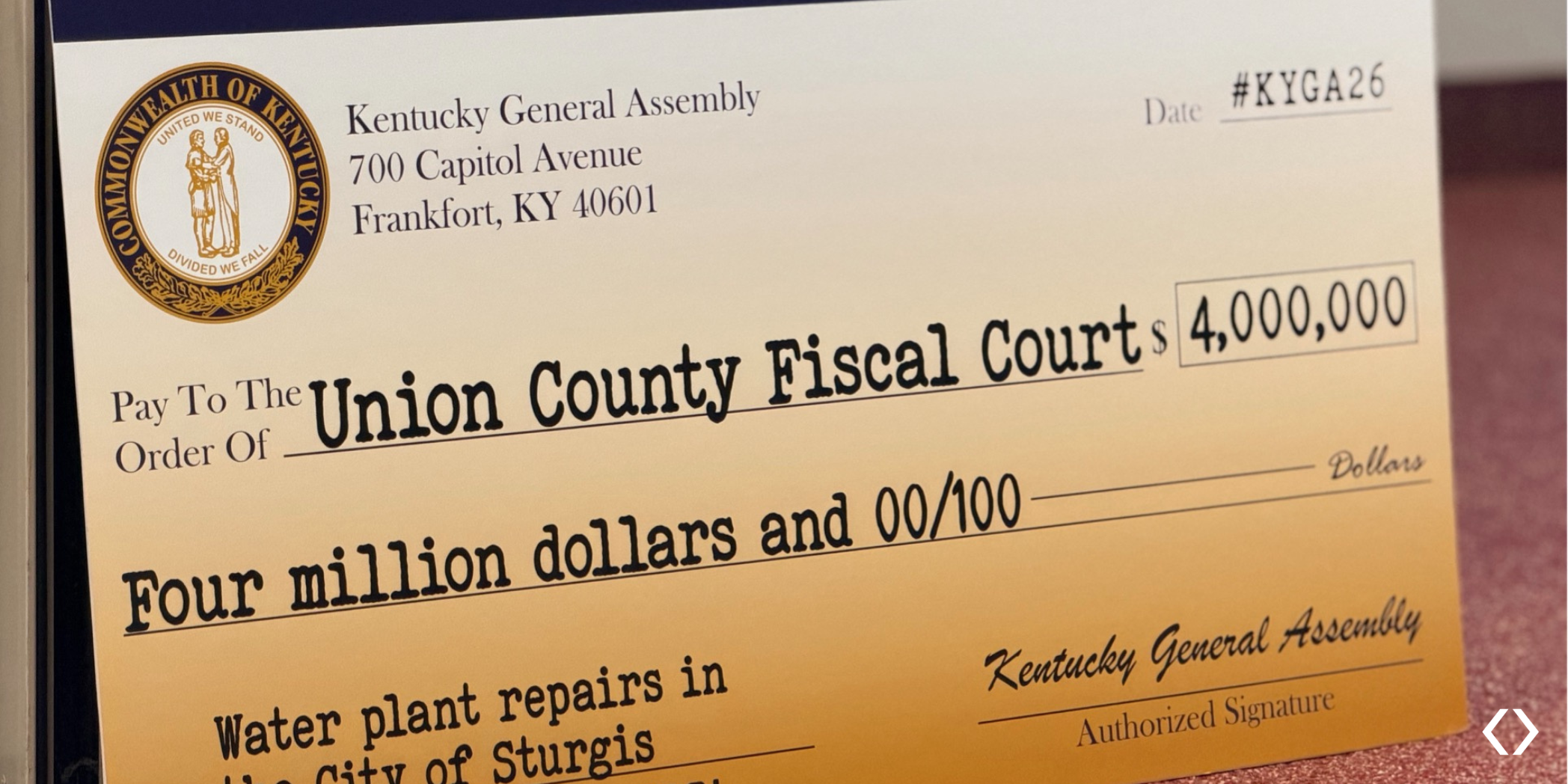
For the City of Sturgis, Kentucky, the effort to bring water treatment back home began with a problem residents knew through their monthly bills.
With its treatment plant out of service, the City was purchasing water from outside the community. Residents faced high water costs, and City leaders faced a difficult question: How could they make an essential service more affordable while paying for the infrastructure to change it?
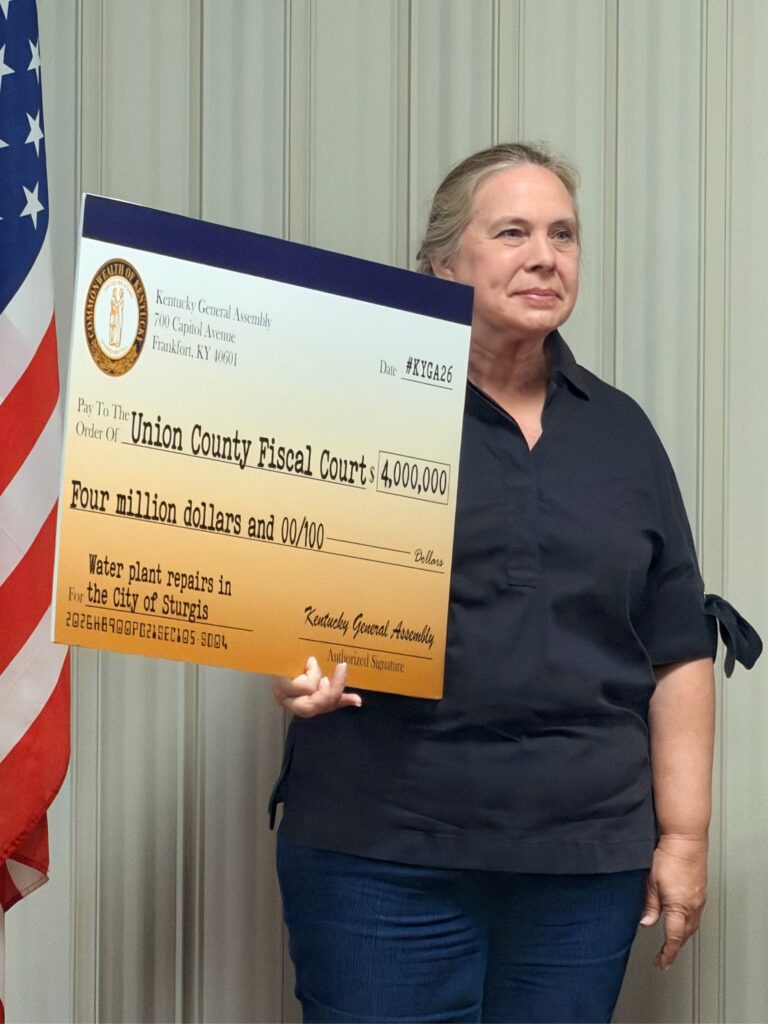
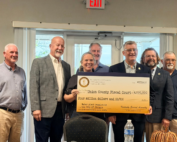
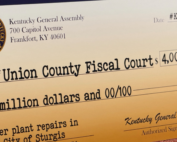
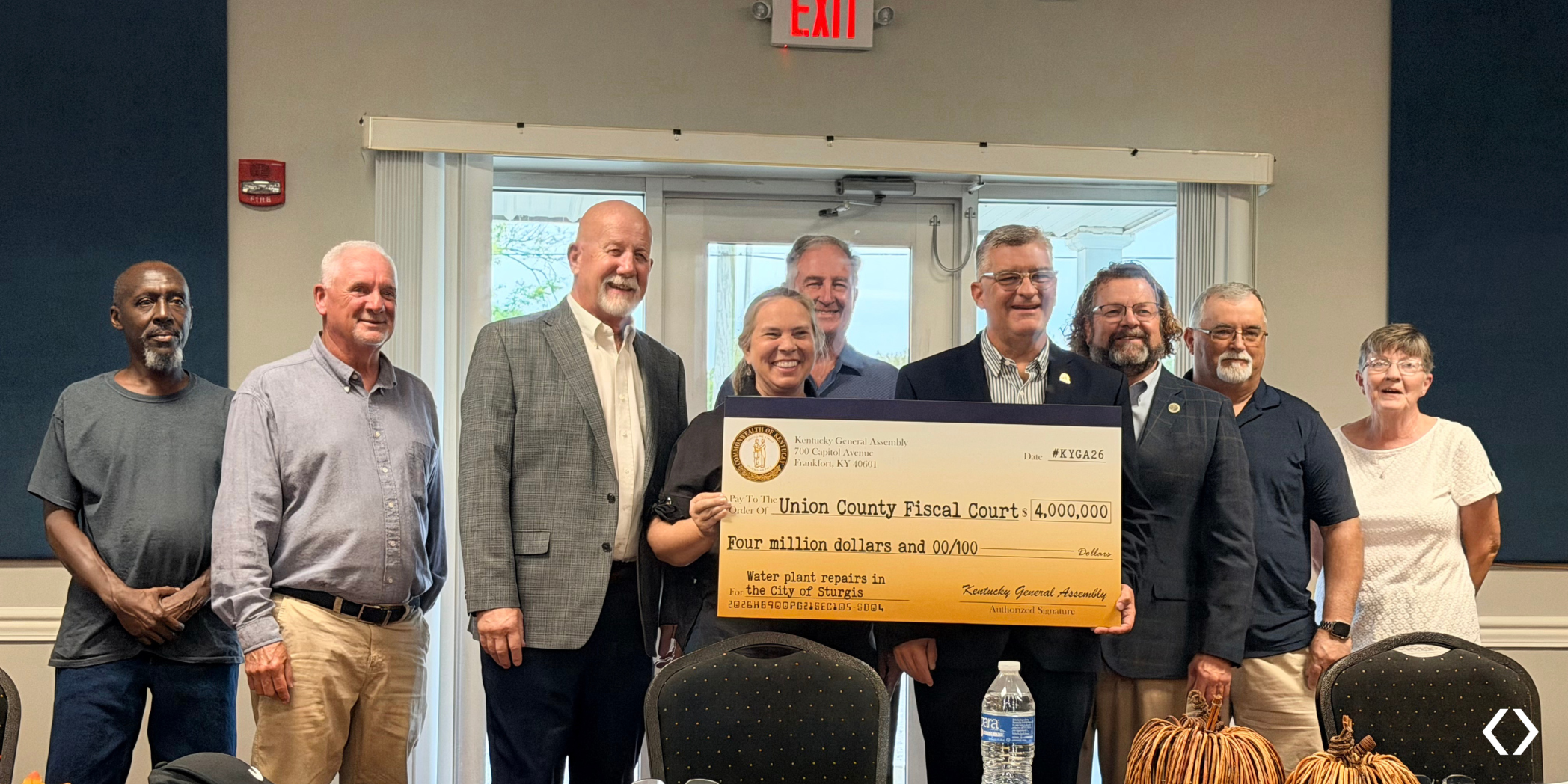
Kentucky Representative Suzanne Miles presents $4 million in state funding for Sturgis water plant improvements.
Three years of planning, collaboration, and persistence have brought Sturgis closer to an answer. The City has secured more than $16 million in grants to support a new water treatment plant and water system improvements, a milestone officials say will help reduce water costs and restore local control over treatment.
Behind that announcement is a community that kept working toward a solution, even when the path was uncertain.
A Future Worth Working For
Mayor Billy Adams and the City Council set out to give Sturgis another option for meeting its water needs. Returning to local production would require a workable engineering plan, a clear understanding of costs, and funding that could put the project within reach.
Each step depended on the next. Before the City could pursue construction, it needed to understand whether producing its own water made financial sense. Before it could move a plan forward, it needed to identify improvements and build a case for funding.
“This milestone is a testament to the hard work, determination, and dedication of the City’s leadership to improving their community,” said Jonathan Rehner, PE, Kentucky Area Manager at Clark Dietz. “Their commitment is helping create a lasting benefit for the residents of Sturgis for generations to come.”
The funding announcement gives that sustained effort a tangible result. It also supports a broader vision for Sturgis. The City’s Strategic Plan, developed with the Kentucky League of Cities, connects improvements like this one with goals for revitalization, business development, and quality of life. City leaders see more affordable water as one way to help residents stay and encourage others to build a future in the community.
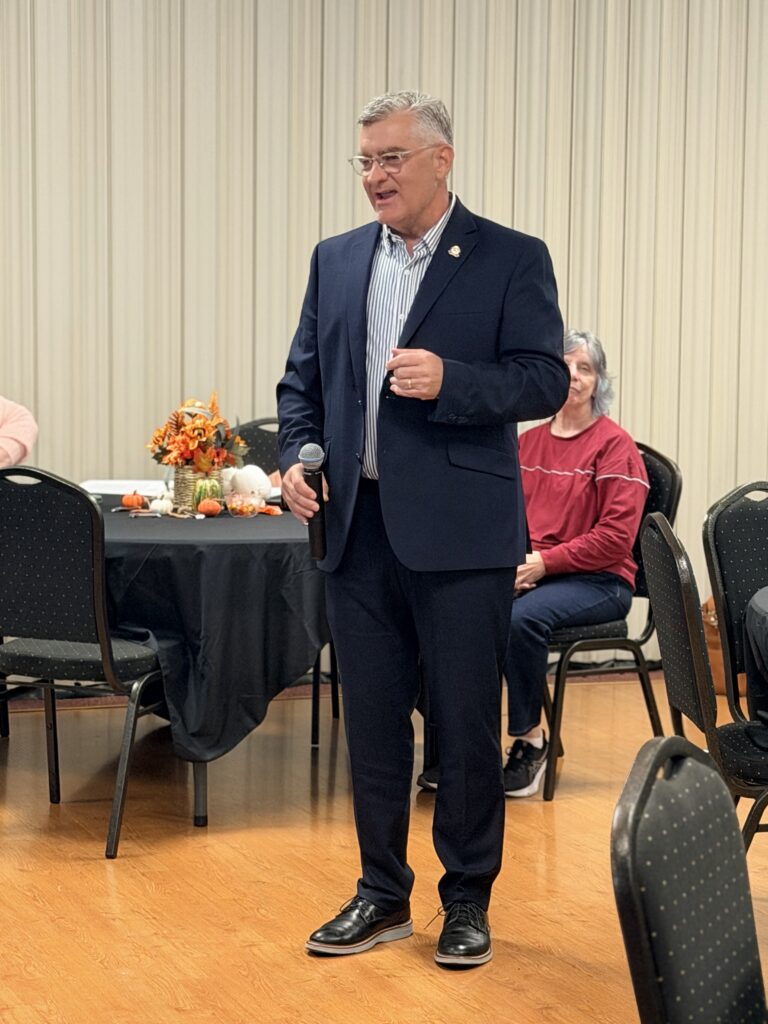
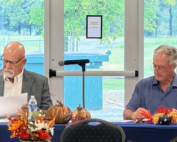
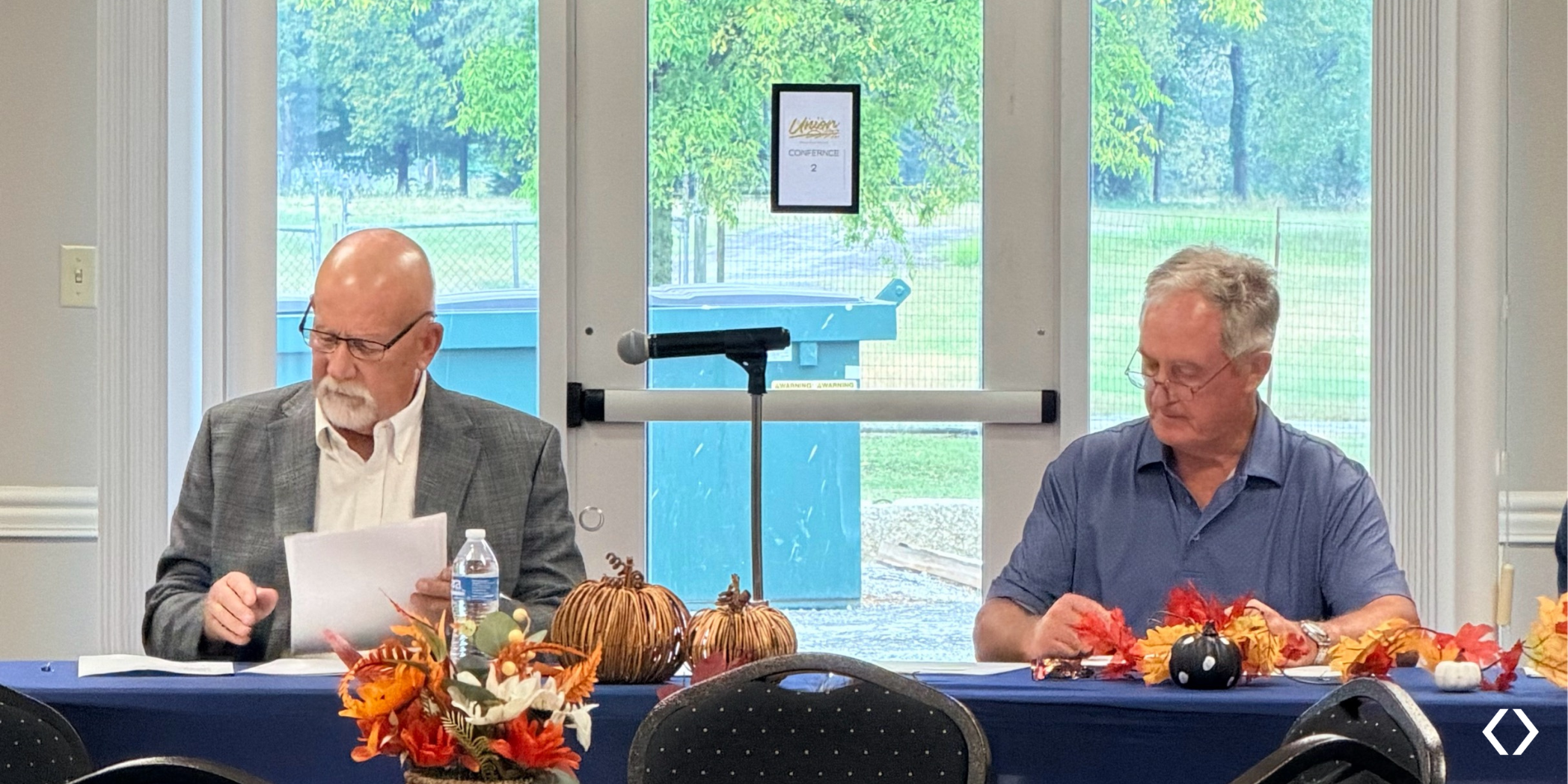
Kentucky Senator Robby Mills addresses attendees as Sturgis celebrates progress toward restoring local water treatment.
Bringing Water Treatment Home
Sturgis’ former treatment plant used surface water before it was taken out of service several years ago. The plan for restoring local production starts with a different source: groundwater.
Making that change takes an entire system. Water must travel from a well to the treatment plant, move through treatment, and then reach the homes and businesses that depend on it.
The planned project includes a water treatment plant capable of producing 225,000 gallons per day, groundwater well infrastructure, approximately 4,500 feet of pipe to carry untreated water to the plant, and 12,000 feet of pipe to carry treated water into the system. It also includes a new connection with Crittenden County Water District.
Those improvements would give Sturgis the ability to produce water locally again. For City leaders, the goal is a system that balances dependable service with the long-term cost of providing it.
Investing in Producing Water Locally
As Sturgis explored its options, Clark Dietz helped the City examine a fundamental question: What would it take to produce water locally, and how would that compare with continuing to buy it?
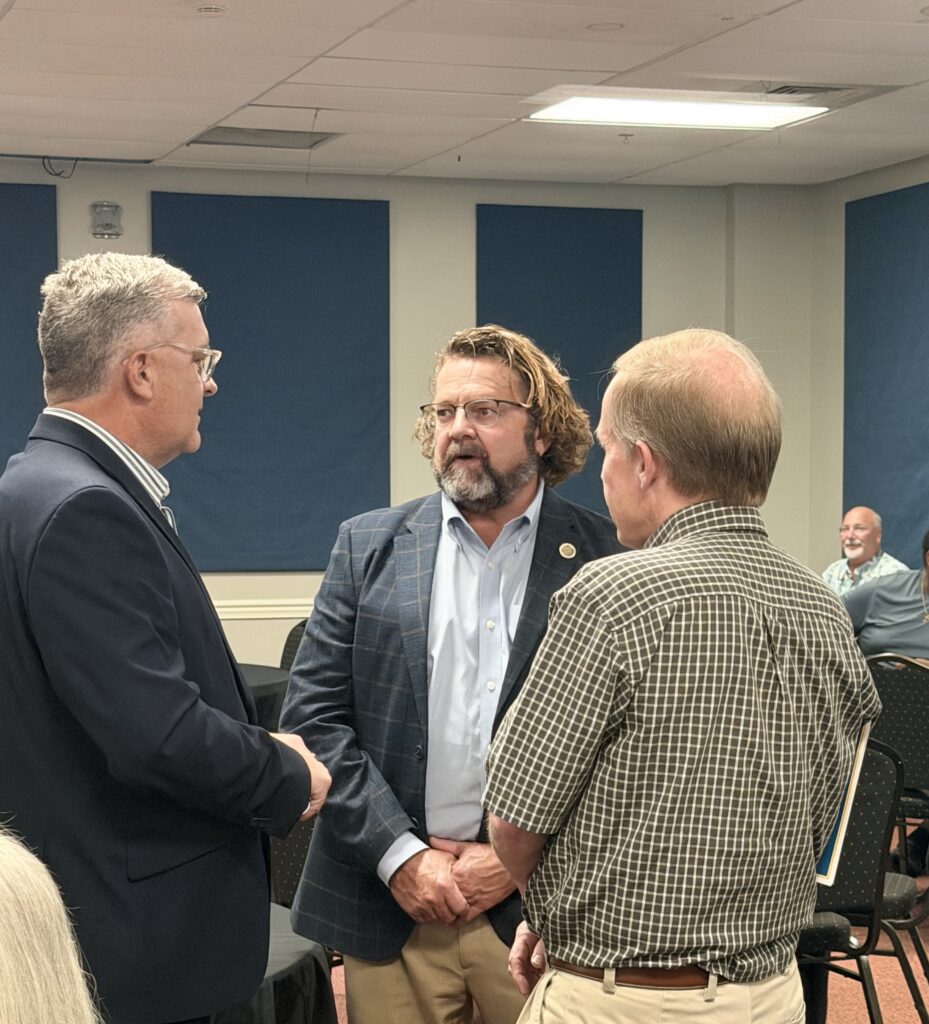
Union County Judge/Executive Adam O’Nan connects with Kentucky Senator Robby Mills and an attendee during the Sturgis gathering.
An initial feasibility and cost study evaluated the improvements needed to reactivate the existing treatment infrastructure using groundwater. It considered both construction expenses and the ongoing costs of operating and maintaining the plant, including an estimate of the cost to produce each 1,000 gallons of treated water.
That work gave City leaders a financial and technical foundation for weighing their options and pursuing funding.
Clark Dietz then completed a Preliminary Engineering Report evaluating project alternatives and supported funding applications. The team has also worked on identifying a groundwater well location and coordinating permitting requirements with the Kentucky Division of Water. As the project advances, the City’s agreement with Clark Dietz includes final design, bidding assistance, construction administration, and on-site construction observation.
“Great things happen when a community has leaders like Mayor Adams and the Council, who are willing to think big and put in the work to make things happen,” said Sherry Mulkins, Client Advisor at Clark Dietz. “Sturgis is a wonderful example of what strong leadership, collaboration, and a shared commitment to residents can accomplish. It’s been a privilege to work alongside the City and see its vision come to life.”
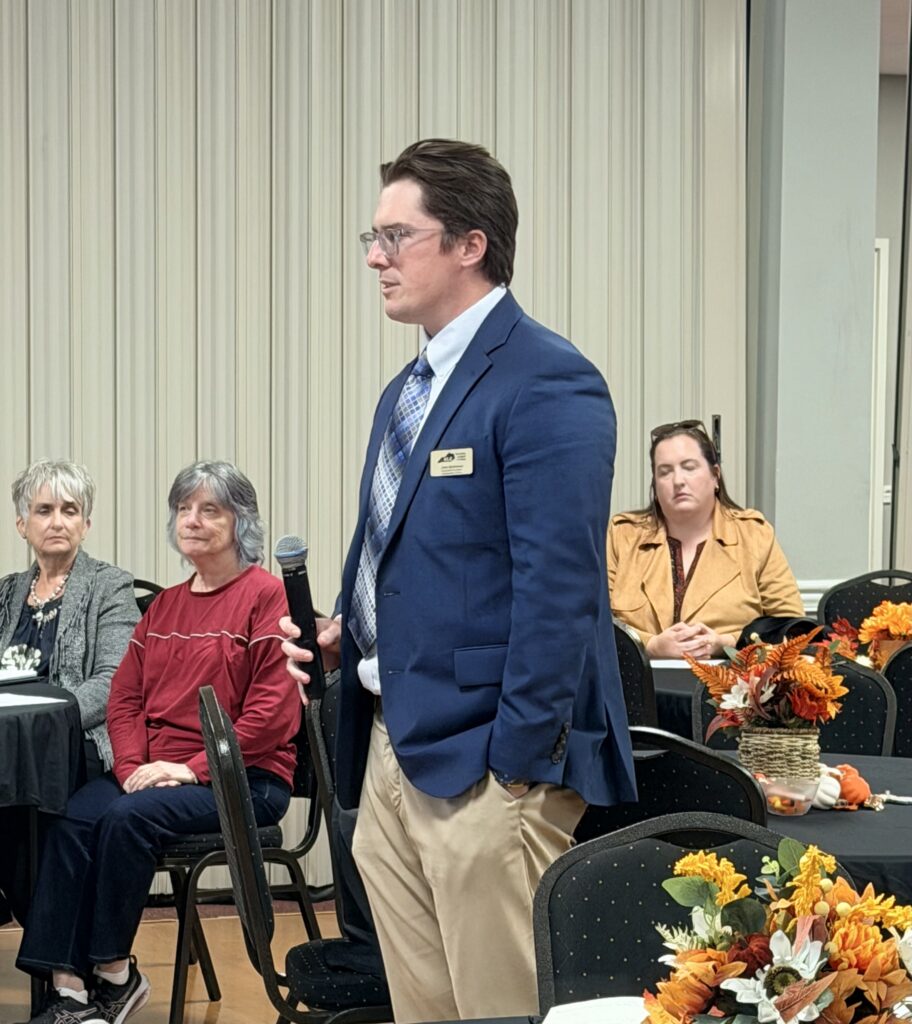
John Buchanan of the Kentucky League of Cities presents the Sturgis Strategic Plan, connecting community priorities with a vision for long-term growth.
A Milestone With Residents at Its Center
There is still work ahead before Sturgis can turn on the new system. But securing grant funding moves the City closer to delivering on the concern that started this effort: the cost of water for the people who live there.
For Mayor Adams, the Council, and their community partners, the milestone reflects years of decisions made with those residents in mind. The next chapter is turning that preparation into infrastructure that can serve Sturgis for generations.
Read the 14 News feature on Sturgis’ funding milestone.
To learn more about our Kentucky services, contact Sherry Mulkins and Jonathan Rehner, PE.