More than a decade ago, Steve Caudill, PE, sat across from Jonathan Rehner, PE, during a job interview and knew he wanted Jonathan on his team. At the time, Steve was a vice president at another engineering firm. Jonathan was an engineer early in his career who stood out for more than his technical abilities. Steve remembers him as outgoing, engaged, interested in engineering, and eager to learn. Jonathan joined Steve’s team.
What followed was a working relationship that has lasted more than 10 years, evolving from manager and young engineer to mentor and mentee, then to trusted peers. Today, they are working together again at Clark Dietz, only this time, the roles look a little different.
Jonathan serves as Clark Dietz’s Kentucky Area Manager, and Steve is a Civil Team Lead. Both are based in the firm’s Lexington, Kentucky, office and are part of Clark Dietz’s broader Civil Group, bringing local relationships and Kentucky experience together with the resources, experience, and support of colleagues across the firm.
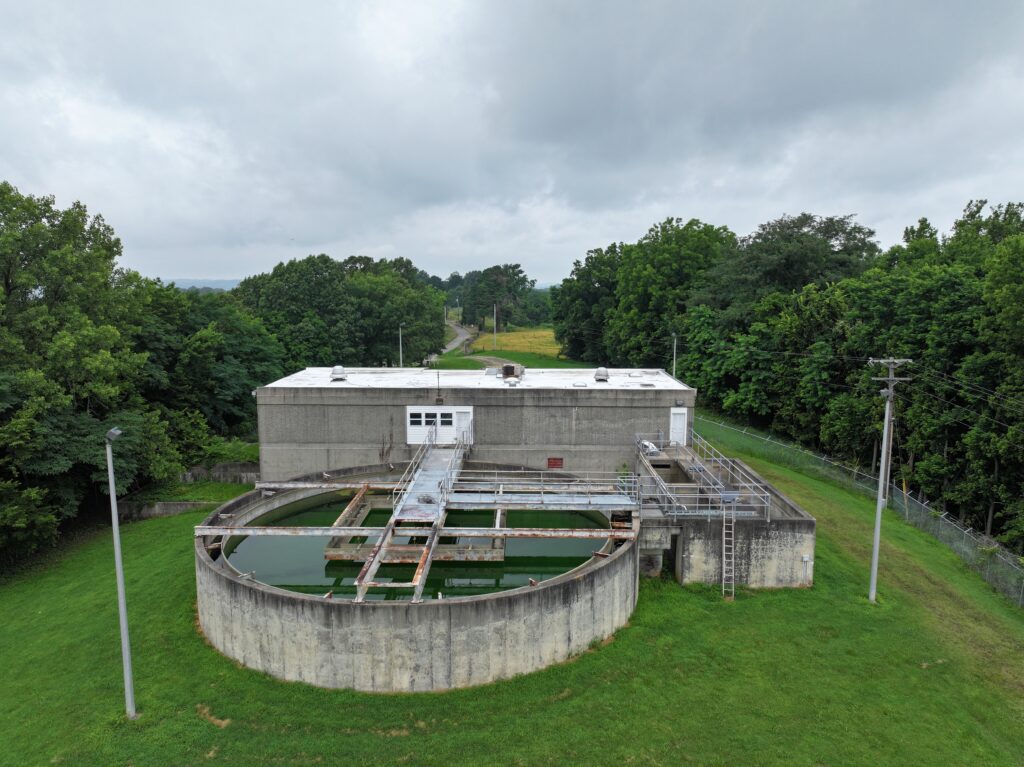
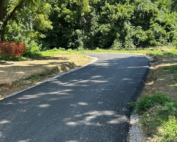
Image of water treatment plant (Sturgis, KY).
Jonathan joined Clark Dietz first and later reached out to Steve, his former boss and longtime mentor, about becoming part of the growing Kentucky team.
For both, that progression reflects something bigger about engineering. Careers are built through projects and technical knowledge, but they are also shaped by the people who teach, challenge, support, and learn from one another along the way.
Different Paths to Engineering, a Shared Focus on Communities
Jonathan’s interest in engineering started long before he knew exactly what an engineering career would look like.
As a kid, he liked building with Legos and playing SimCity, where decisions about roads, water systems, development, and infrastructure affected how a community grew. When it came time to choose an engineering discipline, he found himself drawn to civil engineering and its connection to public service. He liked the idea that the things he designed could have a direct impact on a community, whether that meant working with local officials or helping provide something as fundamental as access to safe drinking water.
Steve took a different route. He did not grow up around engineers and initially had only a general idea of what they did. What he did know was that he had always been interested in understanding how things worked and how they were put together. Engineering eventually gave him the chance to take that curiosity and create something from what he describes as a “blank piece of paper.”
“I didn’t really feel like I would be a great inventor, but I thought, you know, I could design things,” Steve recalled.
Over his career, much of that design experience has centered on water, wastewater, and stormwater infrastructure, with additional experience in development and roadway design. Water resources remains the work he is most drawn to.
When Mentorship Comes Full Circle
When Jonathan joined Steve’s team, their relationship was initially much more traditional: Steve was the experienced engineer and department leader, while Jonathan was learning both the technical side of the profession and how an engineering firm operates. That changed over time.
Jonathan describes their relationship today as much more peer-to-peer. Instead of one person teaching and the other learning, each brings different experiences and ideas to the table. They can challenge an approach, work through alternatives, and use two perspectives to find a better solution.

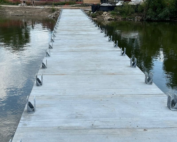
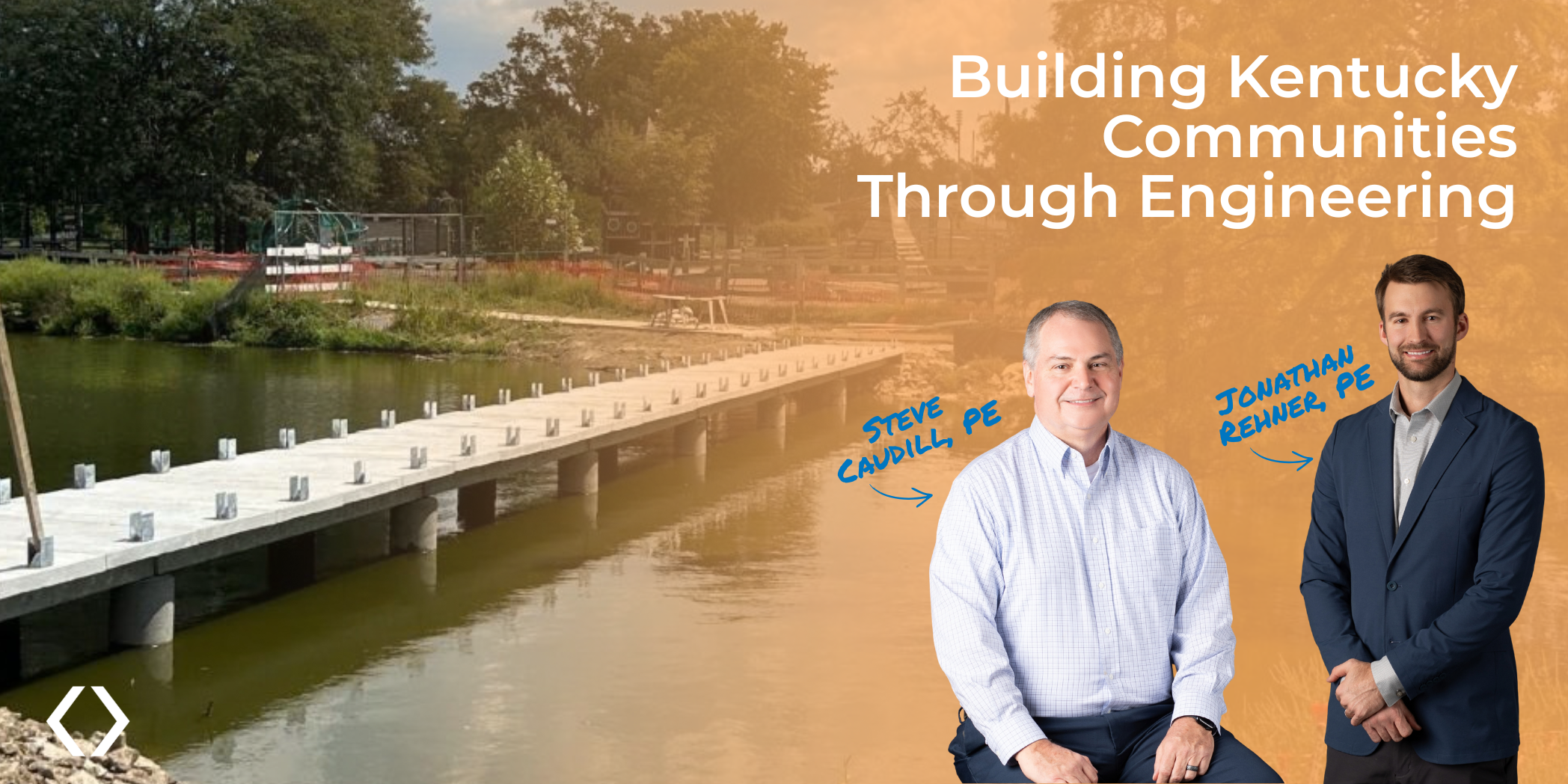
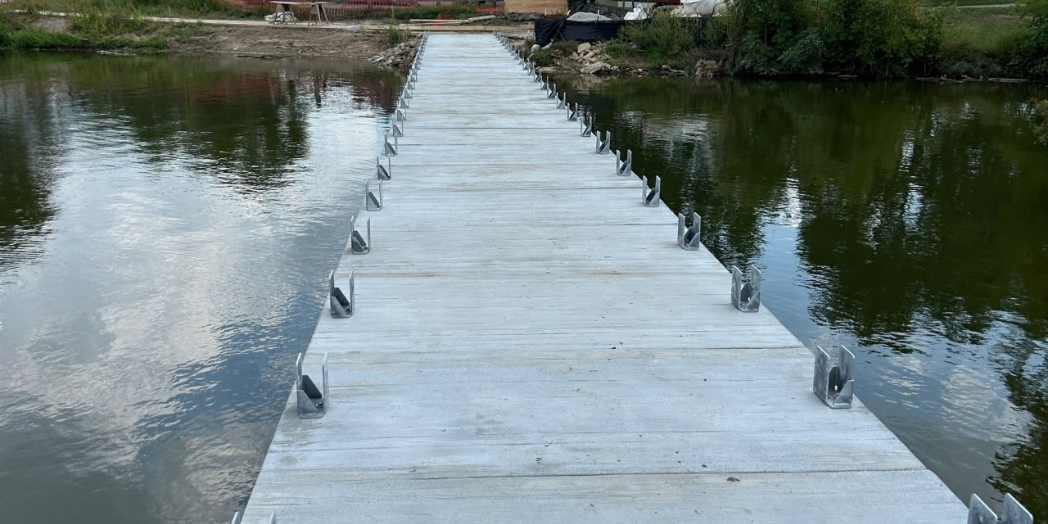
Jacobson Park Pedestrian bridge components (Lexington, KY).
Still, there are lessons from those earlier years that Jonathan carries with him. One of the most important is deceptively simple: it is okay not to know the answer. Steve taught him that clients are better served by an engineer who is willing to say, “I don’t know, but I’ll find out,” than by someone who tries to provide an answer they cannot support. Jonathan now passes that lesson along to younger staff, along with an emphasis on honesty, communication, relationships, and becoming someone a client can trust.
Steve’s own approach to mentorship was shaped by engineers earlier in his career. Among the lessons he carried forward was the importance of taking time to explain the work, checking in regularly, and creating a feedback loop rather than assuming everyone sees a project or situation the same way. That focus on people has stayed with him as his responsibilities have grown.
“You won’t know everything,” Steve said of leadership. His advice is to surround yourself with people whose strengths fill those gaps and then help raise the people around you.
It is also one reason the reversal in their roles at Clark Dietz has worked so naturally. Steve says there was little concern about working for someone he once managed because of the respect he has for Jonathan’s judgment and engineering abilities. And mentorship has never flowed in only one direction.
Steve points to Jonathan’s approach to client meetings as something he has adopted himself. Jonathan closes meetings by documenting decisions, action items, responsibilities, and deadlines so everyone leaves with the same understanding of what happens next.
Years after Steve began mentoring Jonathan, he is still learning from him too.
Bringing Their Experience to Clark Dietz’s Kentucky Team
That shared history is now contributing to the continued growth of Clark Dietz’s Civil practice in Kentucky.
Jonathan and Steve bring decades of experience working directly with municipal clients throughout the life of a project, but they are not doing it alone. From the Lexington office, they work alongside Kentucky staff and draw on the capabilities of Clark Dietz’s Civil Group across the firm. That connection gives local clients a team that understands Kentucky communities while also having access to a broader network of technical resources and experience. Their work includes water, stormwater, and wastewater infrastructure, roadway and civil improvements, and parks and recreational facilities.
Two current areas of work illustrate the range of needs the Kentucky team helps communities address.
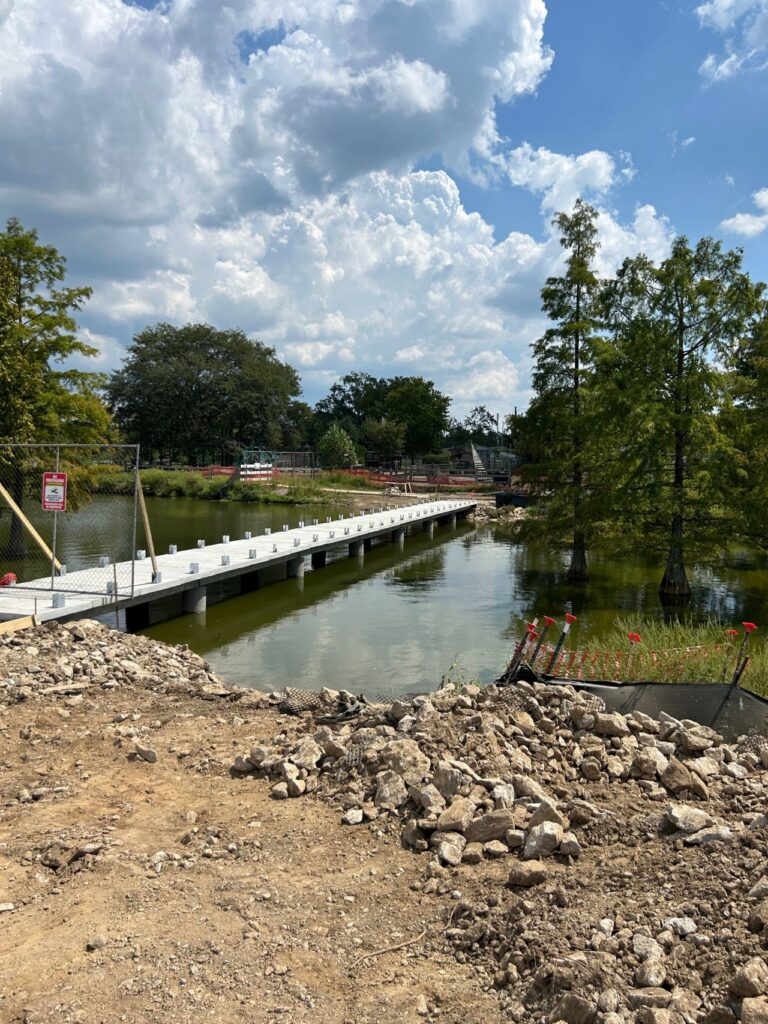
Jacobson Park Pedestrian Bridge Replacement (Lexington, KY).
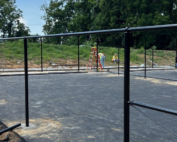
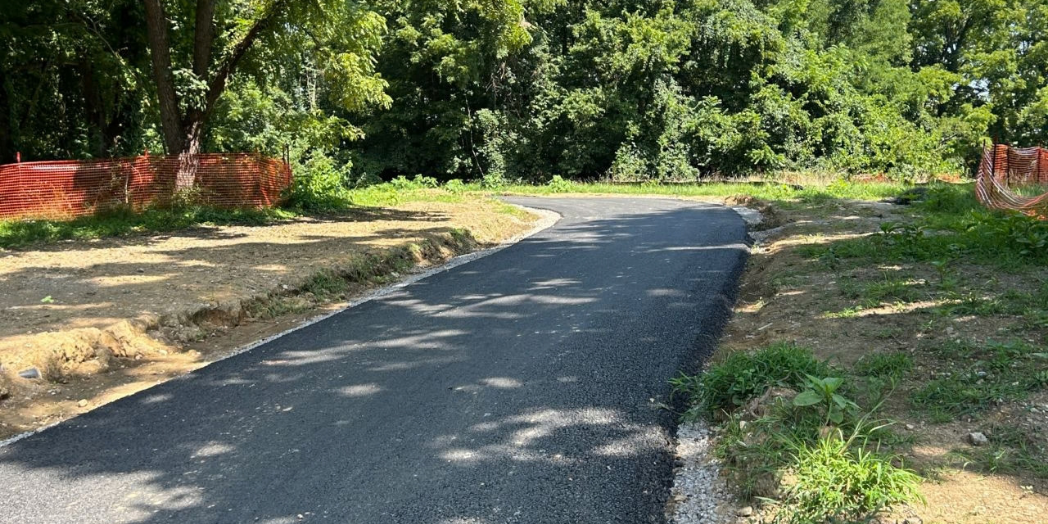
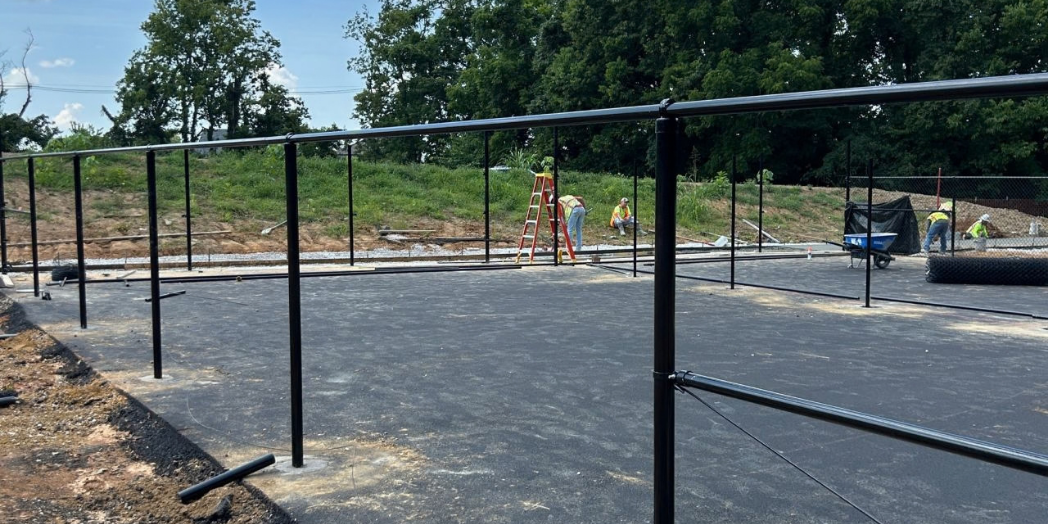
In Lexington, Clark Dietz has been working with the City’s parks system on improvements that create places residents can use and enjoy. One project includes pickleball and basketball courts, trails, and a playground. For Jonathan, seeing that kind of project move from design to construction has an added personal dimension. As a father of young children, he likes knowing his own family will be able to experience a place he helped bring to life.
The team has also been working with the City of Sturgis on a very different set of challenges. Clark Dietz has helped the community identify and pursue funding while advancing improvements to its water system, including a new water treatment plant, downtown water replacement, water line extensions, and other infrastructure needs.
For Jonathan, that work shows another side of what municipal engineering can accomplish. The assignment is not simply about designing infrastructure. It is about helping a community understand its options, navigate the funding process, address long-standing system needs, and put itself in a stronger position for the future.
The contrast between the projects is part of what makes the work meaningful. One may add amenities that make a community more enjoyable. Another may address infrastructure people depend on every day but rarely see. Both contribute to the quality of life of the people who live there.
Building Relationships Before Building Projects
As Clark Dietz continues to grow in Kentucky, Jonathan and Steve are focused on more than adding projects to a portfolio. They want to build lasting relationships with communities.
Jonathan describes the goal as getting to know a client’s system and understanding what they truly need, including needs that may extend beyond the first project that brought Clark Dietz to the table. The Kentucky team is continuing to develop those relationships while growing intentionally and adding people who care about the communities and work they serve.
Steve sees a similar connection between doing good work today and earning the opportunity to serve a client again tomorrow. For him, business development and project delivery are not separate ideas. Every project is an opportunity to demonstrate how the team communicates, responds, and follows through. That approach reflects both the relationships they are building with Kentucky communities and the one Jonathan and Steve have built with each other.
What started as a mentor-mentee relationship has grown into more than a decade of shared projects, exchanged ideas, and mutual respect. Today, Jonathan and Steve bring that experience to Clark Dietz’s Kentucky Civil team, where they continue to support one another, mentor the engineers around them, and build lasting relationships with the communities they serve.
To learn more about how we’re improving Kentucky communities, contact Jonathan Rehner, PE, Steve Caudill, PE, or Sherry Mulkins.