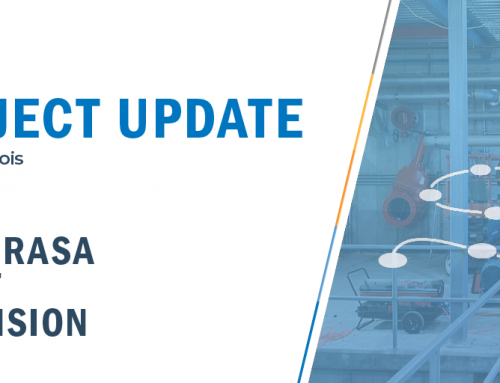


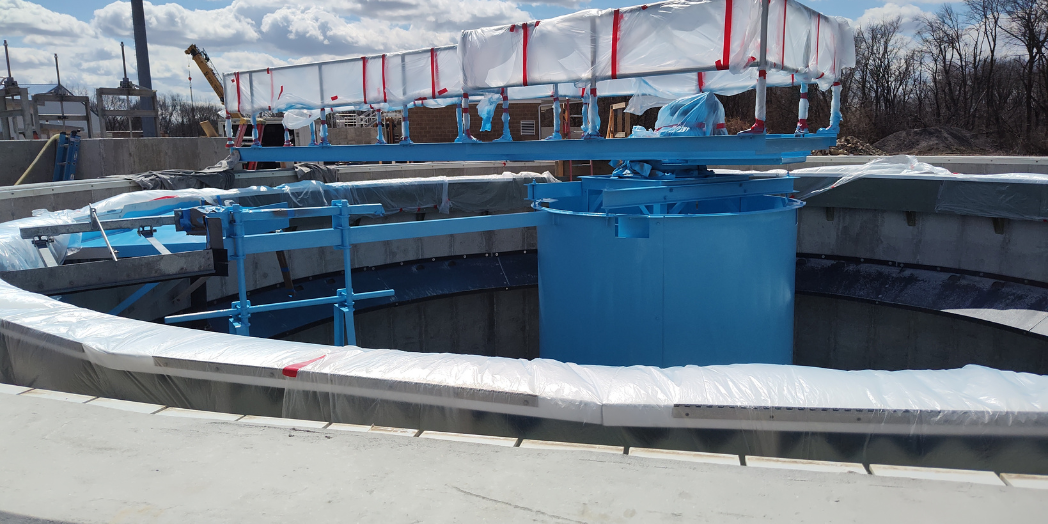
The Village of St. Joseph was facing a problem that limited its future: its wastewater treatment plant was at capacity. Without an upgrade, the community couldn’t grow at the pace of nearby towns like Champaign, Urbana, or Mahomet.
“The driving purpose of this project was to increase capacity to encourage growth and development in the community,” said Andrea Bretl, PE, Project Manager.
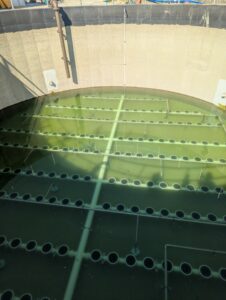
Inside of wastewater treatment tank after project completion.
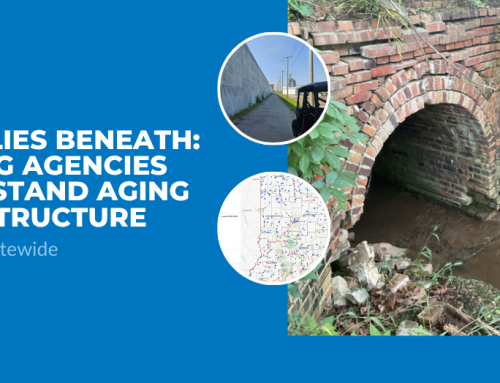
Clark Dietz worked closely with the Village to design and construct a new treatment plant that would allow the village to expand while also protecting the environment. The scope of services was broad, covering process design in civil, structural, mechanical, electrical, and controls work. Beyond the treatment plant itself, the project also tackled a significant bottleneck in the system: a major sewer interceptor replacement. About 5,000 feet of new sewer were installed to solve upstream capacity issues and prepare the community for future growth.
Because the interceptor ran down one of the town’s main roads, the project created an opportunity to improve more than just sewer capacity. The team worked with the Village to rebuild a failing roadway that had long needed attention. At the same time, they added a new sidewalk leading to one of the community’s parks. Before the project, the park wasn’t accessible by foot from the south side of town, so the sidewalk provided a safe connection for families and residents.
“That’s one of the things I like about projects like this,” Andrea said. “We were able to accomplish several goals with one project.”
Challenges and Solutions
One of the biggest challenges was keeping the existing treatment plant operational while the new one was being built in the same location.
“Every day, wastewater still comes down the sewer; it still has to be clean when it goes into the river,” Andrea explained. “We were trying to fit a new plant in the same area where the old one was, and we had to keep the old one working too.”
This challenge was compounded by the fact that the existing plant was surrounded by floodplain on nearly all sides. Even though there were fields nearby, they were either privately owned or unsuitable for expansion because of the floodplain. The project team had to work within the boundaries of the existing site, carefully fitting a new facility into the same footprint while ensuring the old system continued operating every day.
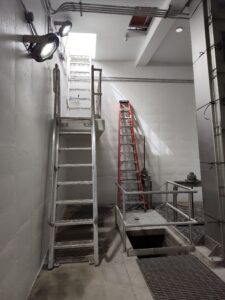
Inside of wastewater treatment plant after project completion.
Benefits for the Community
The expansion provides enough capacity to support over 1,000 more homes in the service area, ensuring the community has room to grow for years to come. The upgraded treatment plant also delivers environmental benefits. With improved nutrient removal, the risk of algae blooms in the Salt Fork Creek is reduced, helping protect aquatic life and improve water quality in the region.
Another major change was the switch from chlorine disinfection to UV disinfection. This step made the facility safer for operators, who no longer have to work with large tanks of chlorine. In addition, the project upgraded safety features that had not been updated in decades, bringing the plant up to modern standards.
The project, which began in 2020, is anticipated to be substantially complete by the end of 2025, with final cleanup extending into early 2026.
Andrea finds this type of work especially rewarding. “It’s just fitting a puzzle together. We try to figure out how all the different pieces can get together most efficiently,” she said. “Projects that meet community goals and at the same time protect the environment in a way that is energy efficient is always really satisfying for me.”
More information can be found here.
The News Gazette also published an article on this project. Visit their website to learn more.
Questions? Contact Clark Dietz Project Manager – Andrea Bretl, PE