



Garden Hills Drainage and Lighting Improvements, Champaign, Illinois
CLIENT: City of Champaign, Illinois

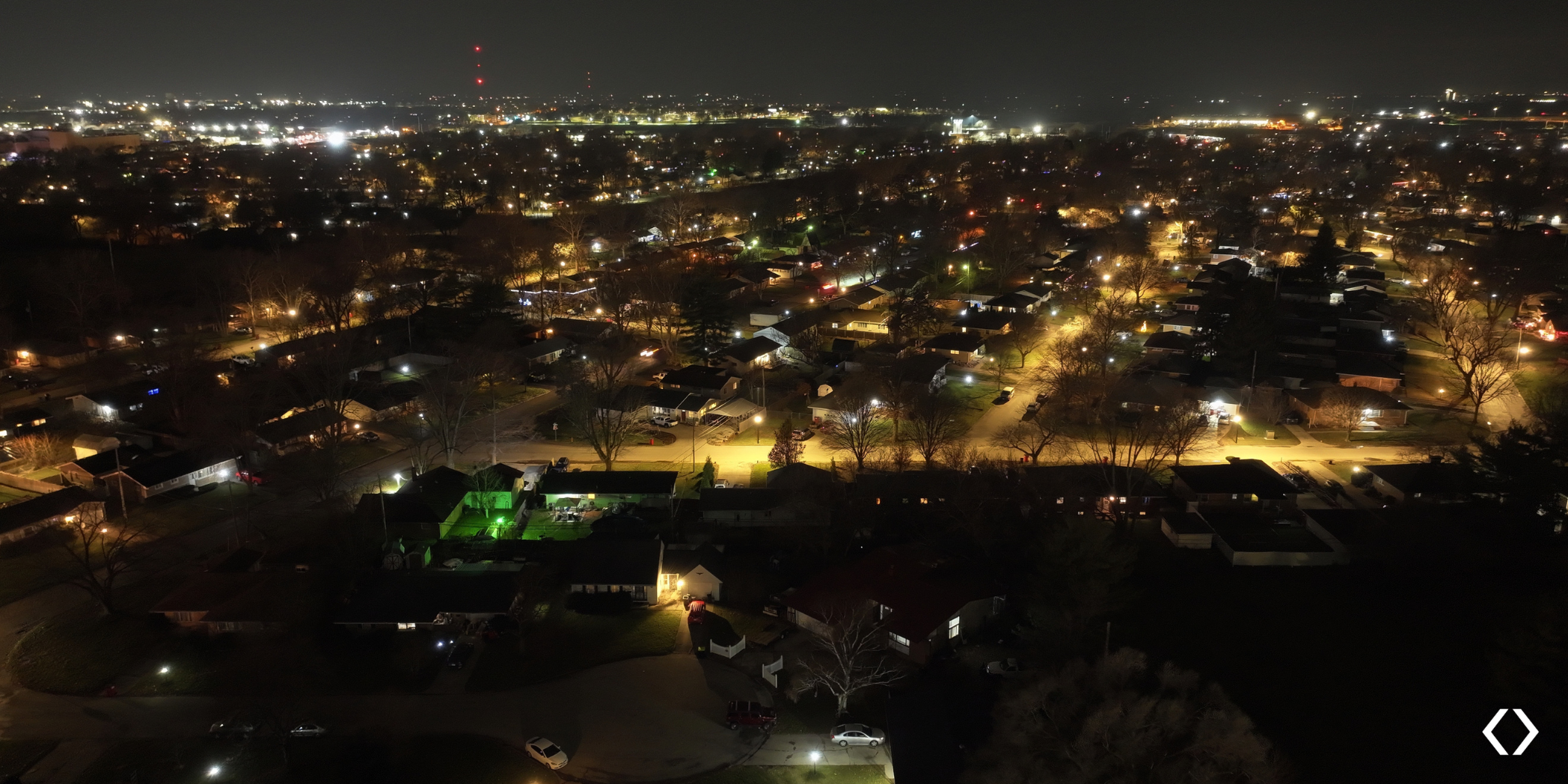
Image of Garden Hills former flooding issues (Champaign, IL).
Garden Hills was one of Champaign’s most flood-prone neighborhoods, where recurring flooding affected residents and demonstrated the need for greater stormwater storage and improved drainage. Aging infrastructure, neighborhood lighting needs, and limited pedestrian connections added to the challenges.
Working with the City of Champaign, Clark Dietz helped address these conditions through the approximately $62 million, multiphase Garden Hills Neighborhood Drainage Improvements Project. The project combined flood protection, roadway reconstruction, lighting upgrades, and public amenities to improve infrastructure and everyday life for residents.
Reducing Flooding Within a Constrained Site
Building on the City’s stormwater master plan, Clark Dietz developed a regional detention basin system designed to capture runoff from a 40-year to 50-year storm event. Nearly 10 feet of elevation change, field conditions, and adjacent Norfolk Southern Railroad tracks required the design to evolve beyond the original concept of a meandering channel.
Constructing two basins beside approximately 2,600 feet of active tracks presented a significant challenge. Excavation and ground anchors could not extend onto railroad property. Working with Quigg Engineering, Clark Dietz designed cantilevered soldier-pile retaining walls that resisted soil, groundwater, and railroad loads without anchors.
The walls recovered approximately 15 feet of basin width, maximizing stormwater storage while preserving space for public amenities. During significant rainfall events, the partially constructed basins captured runoff and reduced neighborhood flooding before construction was complete.
Improving Safety and Connections
The railroad divides Garden Hills, while the neighborhood school serves families on both sides. Residents relied on a single pedestrian railroad crossing, making access to that connection an important consideration.
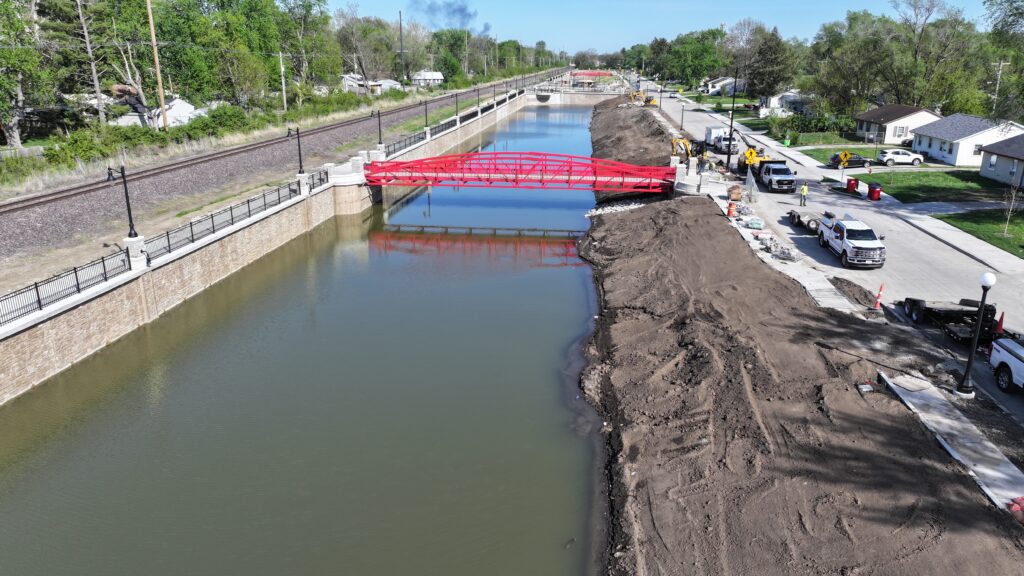
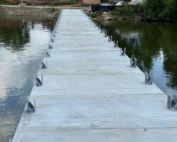
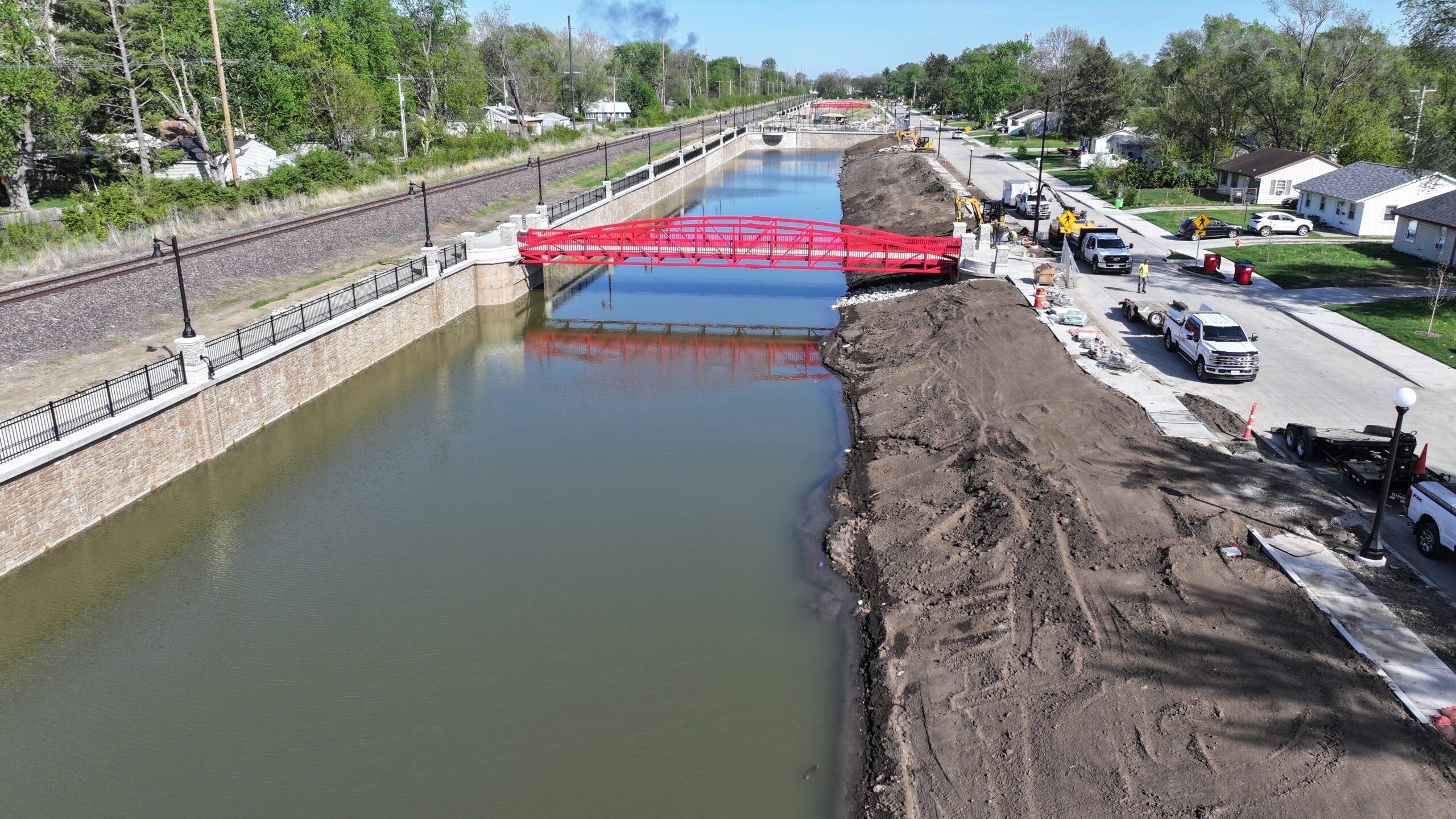
Garden Hills pedestrian bridge (Champaign, IL).
The project improved the corridor approaching the existing crossing with walking paths, seating, and lighting. Two red pedestrian bridges span the detention basins and connect the surrounding public spaces.
Phase 1 lighting improvements included approximately 120 new overhead streetlights with pedestrian globes, incorporating 27 existing fixtures into the final system. New conduit, conductors, and junction boxes modernized the infrastructure and improved visibility throughout the neighborhood.
Creating Lasting Community Value
Phase 2 reconstructed Hedge Road between Mattis Avenue and Hedge Court using a complete street approach, including new storm sewer, full-depth concrete pavement, sidewalks, and street lighting.
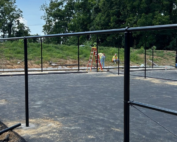
Around the detention basins, playgrounds, basketball courts, overlooks, rain gardens, native landscaping, and gathering spaces created a park-like setting. These amenities give residents places to walk, play, and connect while the basins maintain their primary flood-control function.
Extending Flood Protection Through Phase 3
Phase 3 will install large-diameter trunk storm sewers to transport runoff from the watershed north of the railroad tracks to the Hedge Road detention basin. Improvements include storm sewer installations along Paula Drive and along Cynthia Drive from Paula Drive to just north of Anita Drive.
Street reconstruction will follow the complete street approach used in Phase 2, incorporating storm sewers, full concrete pavement reconstruction, sidewalks, and street lighting. A new storm sewer outlet system connecting to Garden Hills Park will also address flooding in the fields just north of Garden Hills Elementary School.
Clark Dietz provided preliminary and final design, construction engineering, surveying, geotechnical investigation, drainage, roadway, landscape, and structural design, along with public involvement, land acquisition documentation, and utility and railroad coordination.
The project earned the 2026 Outstanding Civil Engineering Achievement Award from the ASCE Central Illinois Section, recognizing an integrated solution that reduced flooding, strengthened neighborhood connections, and created valuable public space.
Read More:
For a deeper look at our contributions in Garden Hills, explore our projects updates: Big Progress in Garden Hills, Phase 2 Underway, Phase 3 Begins and Progress Update: Garden Hills Bridges Installed as Phase 2 Nears Completion.
Learn more about the Phase 3 design with Ana Niño Flores, PE.
To understand the broader impact of this work, visit the City of Champaign Public Works Department’s Garden Hills Neighborhood Improvements page.
This project was also spotlighted in the Design Develop Construct Journal—read the feature article here.
Garden Hills is a key part of the City of Champaign’s broader stormwater management strategy. Learn more about the master plan here.
This effort builds on previous success, including our work on the West Washington Street Watershed Drainage Improvements & Community Green Space project.
To learn more about the transformation of Garden Hills, read this feature from the News-Gazette.